Cushing Syndrome: Signs and Symptoms, Risk Factors, Diagnosis, Complications, Treatment and Prevention
Cushing syndrome is the clinical state produced by chronic exposure to supraphysiological levels of glucocorticoids. Harvey Cushing described the pituitary basophilism syndrome in 1932; the term "Cushing disease" is now reserved for Cushing syndrome caused by an ACTH-secreting pituitary adenoma, while "Cushing syndrome" covers all causes.
The most common cause overall is exogenous (iatrogenic) glucocorticoid therapy, given orally, parenterally, topically, by inhalation or intra-articularly, and increasingly seen with ritonavir- or cobicistat-boosted regimens that inhibit CYP3A4 and potentiate inhaled or injected steroids. Endogenous Cushing syndrome is rare, with an incidence of about 2-3 per million per year. It is classified as ACTH-dependent (about 80-85%) or ACTH-independent (15-20%). 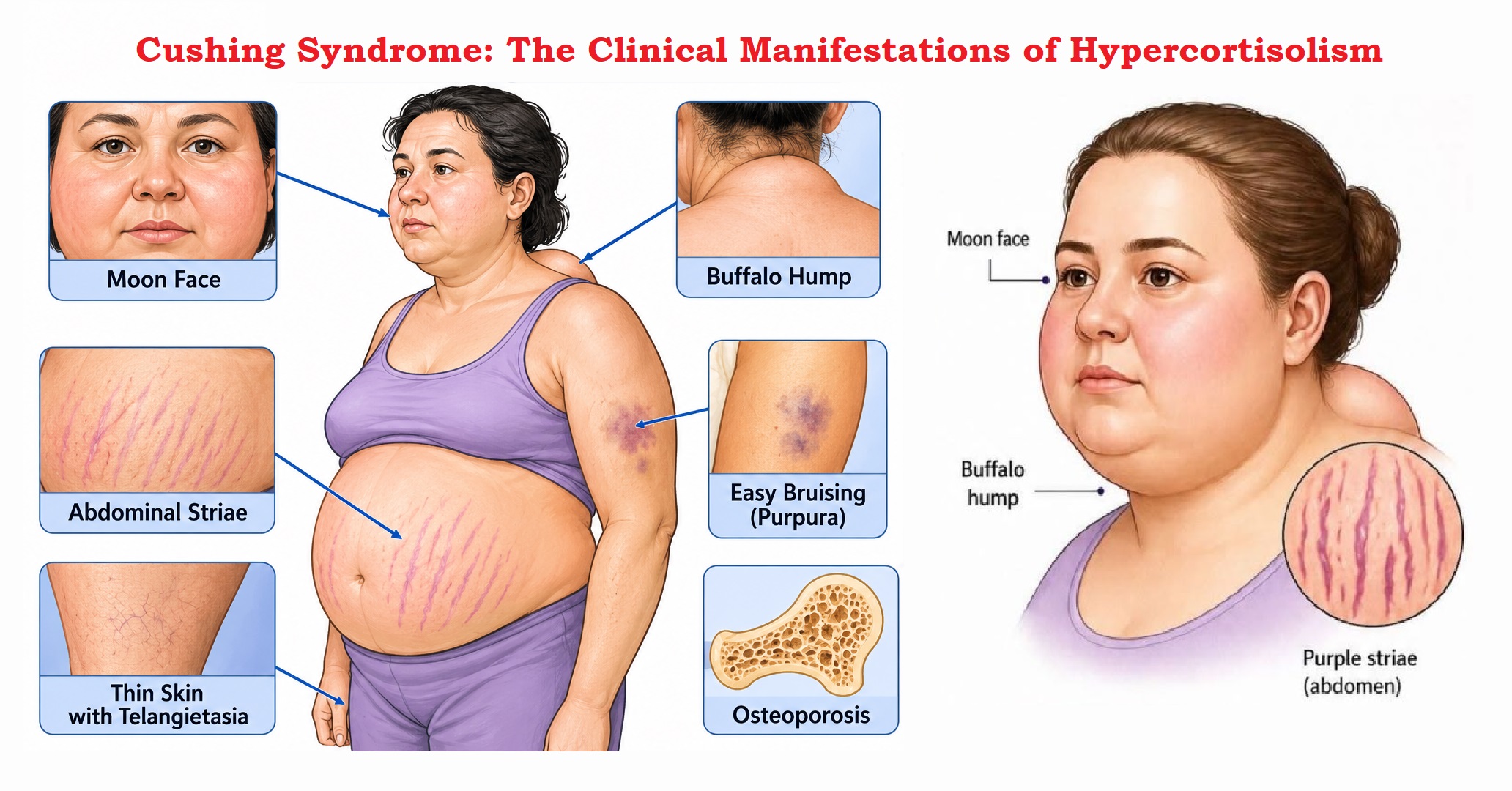
• ACTH-dependent: pituitary corticotroph adenoma (Cushing disease, about 70% of endogenous cases); ectopic ACTH secretion (about 5-10%) from small cell lung cancer, bronchial or thymic carcinoid, pancreatic neuroendocrine tumour, medullary thyroid carcinoma or phaeochromocytoma; and rarely ectopic CRH secretion.
• ACTH-independent: unilateral adrenal adenoma (about 10%), adrenocortical carcinoma (about 5%), primary bilateral macronodular adrenal hyperplasia (PBMAH, often with ARMC5 mutations), primary pigmented nodular adrenocortical disease (PPNAD, as in Carney complex with PRKAR1A mutations) and McCune-Albright syndrome.
Cushing disease predominantly affects women (female-to-male ratio about 3-5:1), usually aged 25-45 years, while ectopic ACTH syndrome is more common in men and older patients, and adrenal carcinoma shows a bimodal age distribution (under 5 years and 40-50 years). Familial syndromes include multiple endocrine neoplasia type 1, Carney complex, McCune-Albright syndrome, Li-Fraumeni syndrome (adrenocortical carcinoma) and familial PBMAH.
Risk factors for iatrogenic disease include high-dose or prolonged glucocorticoid use (for example prednisolone above 7.5 mg/day for more than 3 months), potent topical steroids (including over-the-counter skin-lightening creams and adulterated herbal or traditional preparations), drug interactions that reduce steroid clearance, and glucocorticoid-containing injections.
Pseudo-Cushing states (alcohol use disorder, severe depression, morbid obesity, poorly controlled diabetes, PCOS, pregnancy, and physical stress) cause mild hypercortisolism and cushingoid features but resolve with treatment of the underlying condition. Untreated endogenous Cushing syndrome carries a standardised mortality ratio several-fold higher than normal, mainly from cardiovascular disease, thromboembolism and infection, which improves with remission.
Pathophysiology of Cushing disease
Cortisol is secreted by the zona fasciculata of the adrenal cortex under the control of the hypothalamic-pituitary-adrenal (HPA) axis. Hypothalamic CRH and vasopressin stimulate pituitary corticotrophs to secrete ACTH, which stimulates adrenal cortisol synthesis, and cortisol exerts negative feedback on both CRH and ACTH. Secretion is pulsatile with a circadian rhythm (peak in the early morning, nadir around midnight), and in health the cortisol level falls to a trough late at night.
In Cushing disease, a corticotroph adenoma (often with USP8 or USP48 mutations) secretes ACTH autonomously but retains partial sensitivity to high doses of glucocorticoid feedback. Ectopic ACTH-secreting tumours are entirely resistant to negative feedback. In adrenal causes, autonomous cortisol production suppresses CRH and ACTH, so the contralateral adrenal and normal tissue atrophy. Exogenous glucocorticoids suppress the HPA axis in the same way. 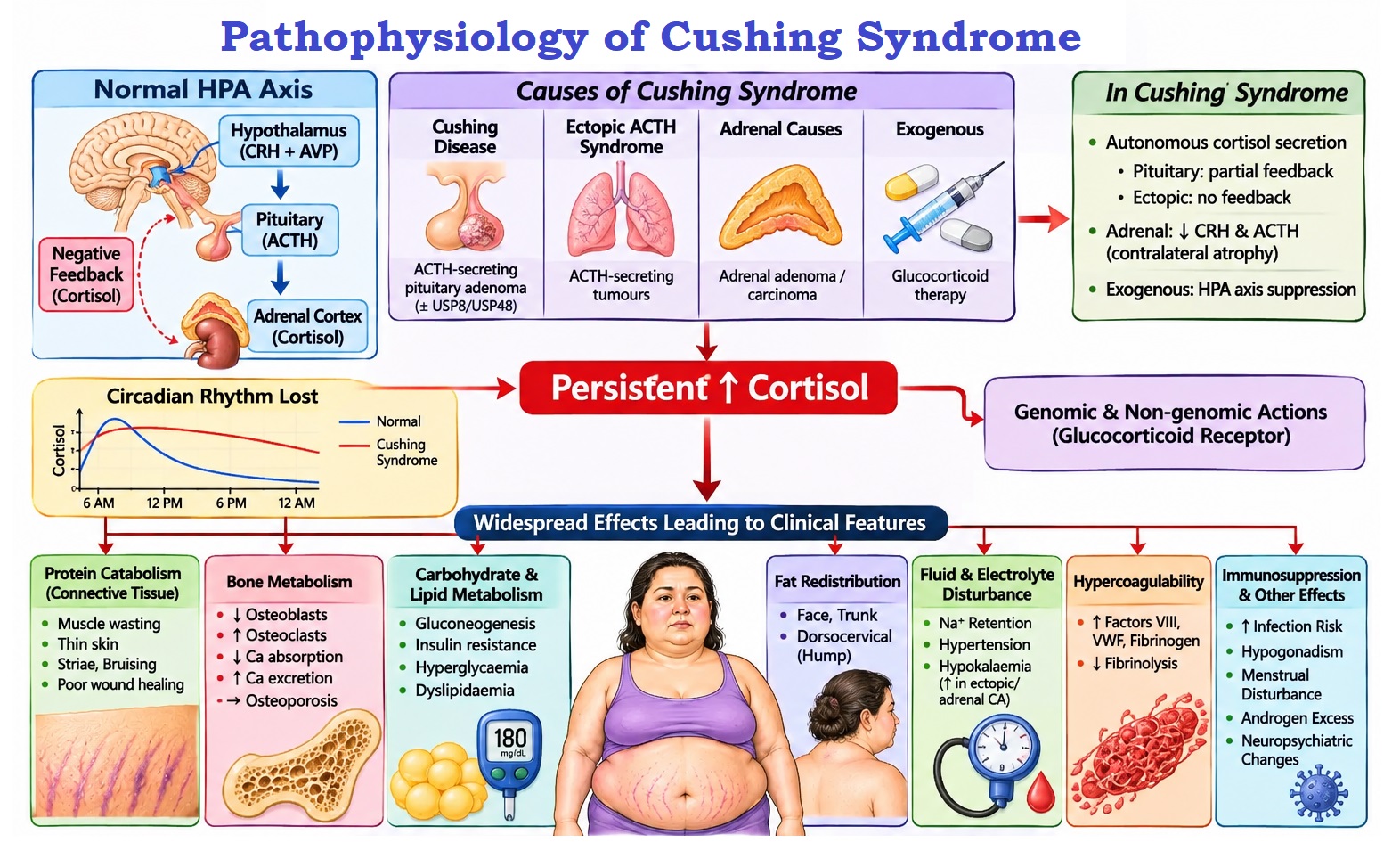 The loss of the circadian rhythm and persistent raised cortisol drive the clinical picture through widespread genomic and non-genomic actions of the glucocorticoid receptor. Catabolic effects on protein metabolism cause proximal muscle wasting, thinning of the skin and connective tissue (striae, bruising), and impaired wound healing. Effects on bone include inhibition of osteoblast function and survival, increased osteoclastogenesis, reduced intestinal calcium absorption and increased urinary calcium loss, leading to osteoporosis. Cortisol promotes gluconeogenesis, inhibits peripheral glucose uptake and induces insulin resistance, causing hyperglycaemia and dyslipidaemia. Redistribution of fat to the face, trunk and dorsocervical region results from differential adipocyte sensitivity.
At very high concentrations, cortisol exceeds the capacity of 11-beta-hydroxysteroid dehydrogenase type 2 in the kidney and activates the mineralocorticoid receptor, causing sodium retention, hypertension and hypokalaemia (particularly marked in ectopic ACTH syndrome and adrenal carcinoma). Increased levels of coagulation factors (VIII, von Willebrand factor, fibrinogen) with reduced fibrinolysis produce a hypercoagulable state. Immunosuppressive effects (reduced lymphocyte, eosinophil and monocyte function) predispose to opportunistic infections. Inhibition of GnRH and gonadotropin secretion causes hypogonadism and menstrual disturbance, while ACTH co-secretion or adrenal tumours may cause androgen excess. Neuropsychiatric effects are mediated through hippocampal and limbic receptors.
Signs and Symptoms of Cushing disease
The presentation is variable, and the features reflect the degree and duration of cortisol excess. The most useful discriminating features (those that are uncommon in simple obesity) are easy bruising, facial plethora, proximal myopathy, wide violaceous striae, and features that are unusual for age such as osteoporosis or hypertension in a young person. In children, weight gain with growth deceleration is the classic pattern.
A. Body habitus and skin
• Central (truncal) obesity with relatively thin limbs, rounded "moon" face with facial plethora, dorsocervical fat pad ("buffalo hump") and supraclavicular fat pads
• Thin, fragile skin, easy bruising and spontaneous ecchymoses
• Wide (over 1 cm) purple-red abdominal, axillary, breast, hip and thigh striae
• Acne, hirsutism and scalp hair thinning; poor wound healing; skin infections such as tinea versicolor and onychomycosis
• Hyperpigmentation in ACTH-dependent forms, particularly ectopic ACTH syndrome, because of the melanocortin-1 receptor effects of high ACTH and POMC-derived peptides. 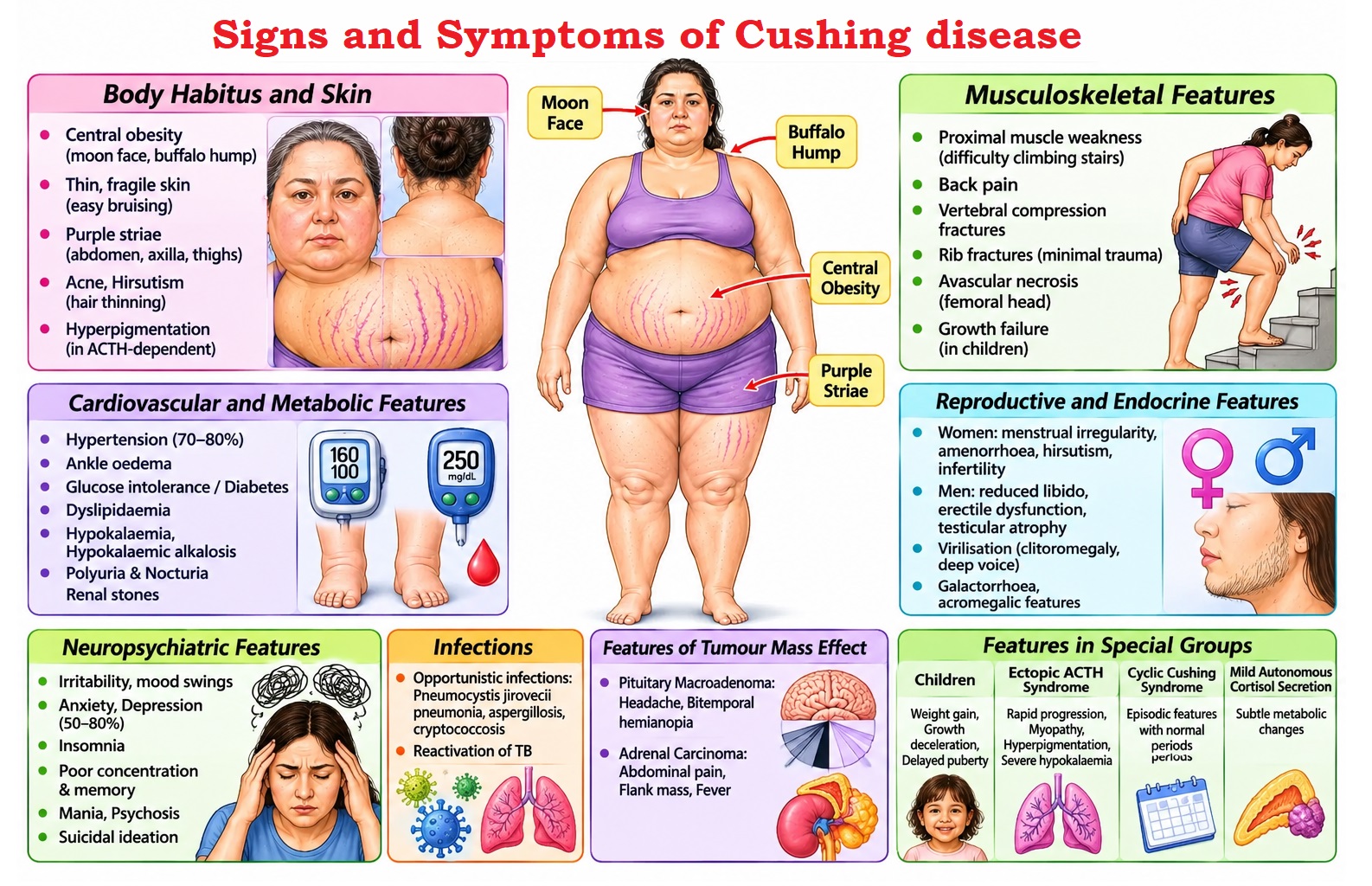
B. Musculoskeletal features
Proximal muscle weakness with difficulty climbing stairs or rising from a chair (the squat test is positive), back pain, vertebral compression fractures, rib fractures with minimal trauma, avascular necrosis of the femoral head, and growth failure in children.
C. Cardiovascular and metabolic features
Hypertension (about 70-80%), ankle oedema, glucose intolerance or diabetes, dyslipidaemia, hypokalaemia (more common with ectopic ACTH), hypokalaemic alkalosis, polyuria and nocturia, and renal stones.
Reproductive and endocrine features
In women, menstrual irregularity or amenorrhoea, infertility and hirsutism; in men, reduced libido, erectile dysfunction and testicular atrophy. Features of virilisation (clitoromegaly, deepening of voice, breast atrophy) and an abdominal mass strongly suggest adrenocortical carcinoma. Galactorrhoea or acromegalic features suggest a plurihormonal pituitary tumour.
D. Neuropsychiatric features
Irritability, emotional lability, anxiety, depression (50-80%), insomnia, poor concentration and memory, mania and, in severe disease, psychosis and suicidal ideation. Impaired memory and hippocampal volume loss may persist after cure.
E. Infections
Opportunistic infections including Pneumocystis jirovecii pneumonia, aspergillosis, cryptococcosis and nocardiosis, and reactivation of tuberculosis, particularly with severe hypercortisolism.
Features of tumour mass effect
A pituitary macroadenoma may cause headache and bitemporal hemianopia. Adrenal carcinoma can cause abdominal pain, a flank mass, weight loss and fever.
F. Features in special groups
• Children: weight gain with decelerated linear growth, delayed puberty, school problems, and plethoric facies. Cushing disease is the most common cause after puberty, while adrenal tumours dominate before age 5.
• Ectopic ACTH syndrome: short history, rapid progression, marked myopathy, hyperpigmentation, severe hypokalaemia, diabetes, hypertension and infections, but few classical cushingoid changes, because the duration is brief.
• Cyclic Cushing syndrome: episodic hormone production with intervening normal periods, producing normal tests between episodes.
• Mild autonomous cortisol secretion: subtle cardiometabolic changes in a patient with an adrenal incidentaloma, without classical features.
Diagnosis of Cushing disease
Diagnosis proceeds in three steps: exclusion of exogenous glucocorticoid exposure, biochemical confirmation of hypercortisolism, and determination of aetiology. Test only those with a reasonable pre-test probability, because the tests have false positives.
The Endocrine Society recommends testing for patients with multiple and progressive features, especially those with discriminatory features; children with weight gain and growth retardation; patients with unusual features for age (osteoporosis, hypertension, type 2 diabetes in the young); and patients with adrenal incidentaloma.
Step 1: exclude exogenous glucocorticoids : Review all oral, injected, inhaled, topical and traditional medicines, including those sold as herbal or skin products. Synthetic steroids other than hydrocortisone do not cross-react significantly in cortisol assays (except prednisolone), so measured cortisol and ACTH are suppressed in iatrogenic Cushing syndrome.
Step 2: screening for hypercortisolism : Use at least two different first-line tests, interpreted together with clinical suspicion:
• Late-night salivary cortisol (two measurements on separate nights, ideally by LC-MS/MS) reflects loss of the circadian nadir. Interpretation requires assay-specific reference limits.
• 24-hour urinary free cortisol (UFC) (at least two collections, with a value above 3-4 times the upper limit of normal being virtually diagnostic). False positives occur with high fluid intake (above 5 L/day), and results are unreliable with renal impairment (GFR below 60 mL/min).
• 1 mg overnight dexamethasone suppression test (dexamethasone 1 mg at 11 pm, serum cortisol at 8 am next day): a cortisol of 1.8 micrograms/dL (50 nmol/L) or less excludes Cushing syndrome. False positives occur with oral oestrogen (raised cortisol-binding globulin), CYP3A4 inducers (phenytoin, carbamazepine, rifampicin, which accelerate dexamethasone clearance), and poor adherence. Measuring a simultaneous dexamethasone level helps.
• Low-dose dexamethasone suppression test (0.5 mg every 6 hours for 48 hours) is an alternative.
Pseudo-Cushing and problem cases
For equivocal results or suspected pseudo-Cushing (alcohol, depression, obesity), consider repeat testing after treating the underlying condition, the desmopressin-stimulated cortisol test, or the dexamethasone-CRH test. In cyclic disease, repeated sampling during symptomatic periods is required.
Step 3: ACTH measurement : Measure plasma ACTH at 9 am (on ice, processed rapidly). Suppressed ACTH (below 5 pg/mL or 1.1 pmol/L) indicates ACTH-independent Cushing syndrome; a level above 20 pg/mL (4.4 pmol/L) indicates ACTH dependence; values of 5-20 pg/mL are indeterminate and need a CRH stimulation test or repeat.
Step 4a: ACTH-independent causes : Perform adrenal CT or MRI. Adenomas are usually under 4 cm, homogeneous and lipid-rich (unenhanced attenuation under 10 Hounsfield units); carcinomas are usually large (over 4-6 cm), heterogeneous with calcification and necrosis, and show high unenhanced attenuation. Bilateral enlarged nodular glands suggest PBMAH, and normal-sized glands with micronodules suggest PPNAD. Serum DHEAS is low in adenomas (suppressed contralateral gland) and elevated in carcinoma, which may also secrete other precursors (17-hydroxyprogesterone, androstenedione, 11-deoxycortisol). Adrenal venous sampling may be needed in asymmetric bilateral disease.
Step 4b: ACTH-dependent causes : Perform dedicated pituitary MRI with gadolinium; microadenomas are visible in about 60-70% (and incidental pituitary lesions occur in about 10% of normal people). If MRI shows a lesion of 6 mm or more, no further localisation is required in a patient with classic features. If MRI is normal, equivocal or the lesion is under 6 mm, perform bilateral inferior petrosal sinus sampling (BIPSS) with CRH or desmopressin stimulation: a central-to-peripheral ACTH gradient of 2 or more at baseline or 3 or more after stimulation indicates a pituitary source (sensitivity and specificity above 95% in experienced centres). Prolactin normalisation improves accuracy. Non-invasive tests such as high-dose dexamethasone suppression (8 mg; more than 50% fall in cortisol) or CRH stimulation add supportive information but are not decisive. For suspected ectopic source, perform CT of chest, abdomen and pelvis, and functional imaging (68Ga-DOTATATE PET-CT, FDG-PET) as needed; occult lesions are common.
Supportive investigations
• Full blood count (leucocytosis, lymphopenia, eosinopenia, polycythaemia)
• Electrolytes (hypokalaemia, metabolic alkalosis), glucose and HbA1c, lipid profile
• Bone mineral density and vertebral imaging
• Other pituitary hormones (prolactin, TSH, gonadotropins, IGF-1) in suspected pituitary disease
• Genetic testing and screening for MEN1 (calcium, PTH, prolactin) in selected patients
Differential diagnosis
Simple obesity and metabolic syndrome, PCOS, pseudo-Cushing states, iatrogenic Cushing syndrome, hypothyroidism, lipodystrophy, glucocorticoid-resistance syndromes and other secondary causes of hypertension.
Complications of Cushing disease
Untreated endogenous Cushing syndrome has a five-year survival of about 50% in historical series. Many complications remain after remission, because tissue damage may be only partly reversible.
1. Cardiovascular complications : Hypertension, left ventricular hypertrophy, heart failure, dyslipidaemia, accelerated atherosclerosis, myocardial infarction and stroke are the leading causes of death. Cardiovascular risk remains elevated even after biochemical cure, although it declines gradually.
2. Venous thromboembolism : The prothrombotic state raises the risk of deep vein thrombosis and pulmonary embolism, with a markedly increased perioperative risk (up to 10-20 times that of the general population), warranting prophylactic anticoagulation around surgery.
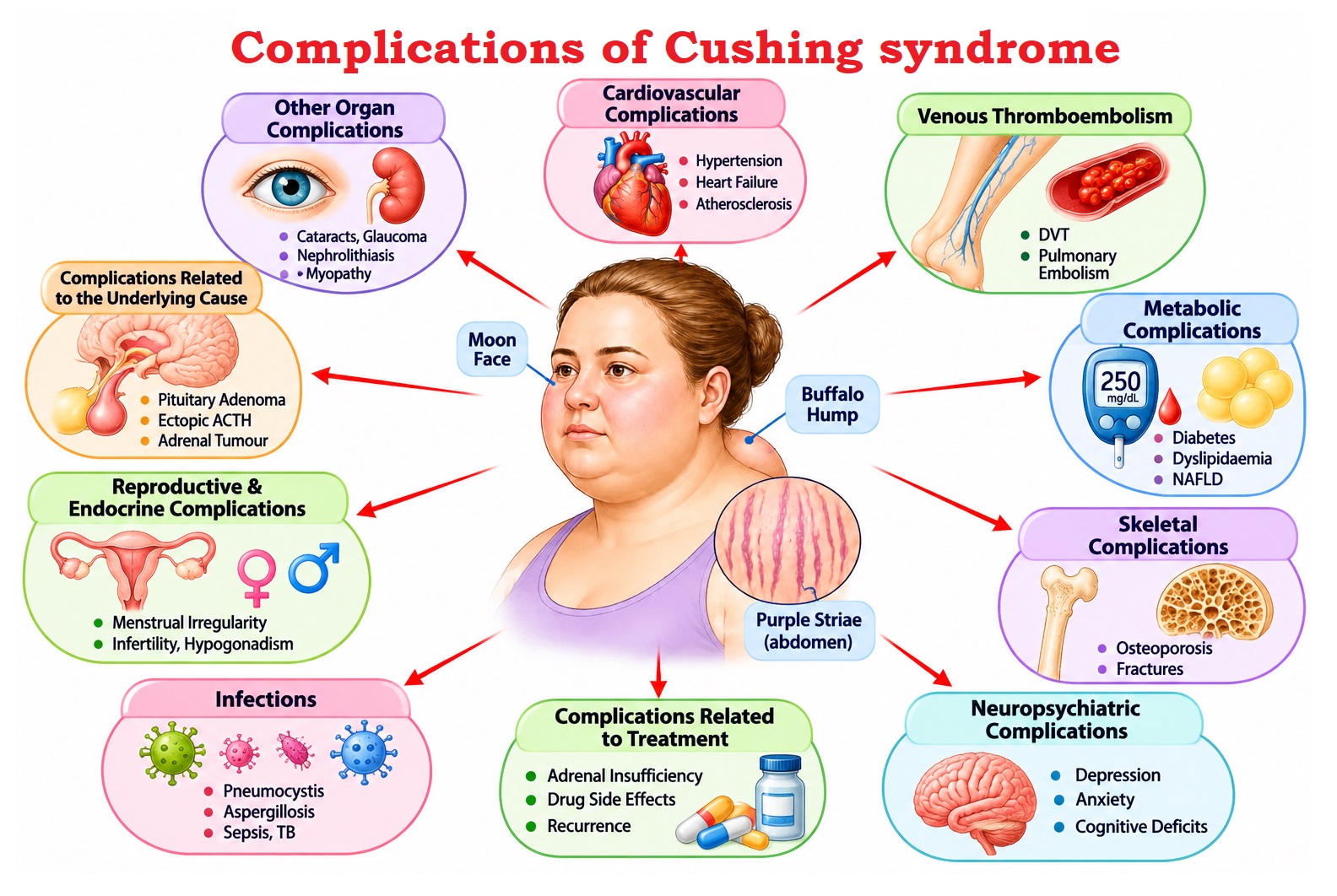
3. Metabolic complications : Impaired glucose tolerance or diabetes mellitus in 20-50%, dyslipidaemia, metabolic syndrome and NAFLD. Diabetes often improves after cure but may persist.
4. Skeletal complications : Osteoporosis and fragility fractures (particularly vertebral, often asymptomatic) occur in 30-50%, with avascular necrosis. Growth failure and reduced adult height occur in children, and may only partly recover.
5. Infections : Severe opportunistic infections (pneumocystis, aspergillosis, fungal and bacterial sepsis, tuberculosis). Prophylaxis against Pneumocystis jirovecii is recommended in patients with severe hypercortisolism.
6. Neuropsychiatric complications : Depression, anxiety, mania, psychosis, cognitive deficits and reduced quality of life. Some deficits persist for years after cure, and psychological care is necessary.
7. Other organ complications : Proximal myopathy with falls, nephrolithiasis, hypokalaemic alkalosis, cataracts and glaucoma (also central serous chorioretinopathy), peptic ulcer when combined with NSAIDs, gonadal dysfunction and infertility, and in pregnancy, spontaneous miscarriage, fetal growth restriction and preterm birth.
8. Complications related to the underlying cause : Pituitary macroadenomas may cause visual loss and hypopituitarism, while ectopic ACTH tumours and adrenal carcinoma bring the burden of malignancy (five-year survival 15-60% for adrenal carcinoma depending on stage).
Complications of treatment
• After successful surgery: adrenal insufficiency from HPA axis suppression (can last 6-24 months or longer), glucocorticoid withdrawal syndrome (myalgia, arthralgia, fatigue, mood changes) and risk of adrenal crisis. Transsphenoidal surgery may cause diabetes insipidus, hypopituitarism, CSF leak, meningitis and sinus complications.
• Bilateral adrenalectomy: lifelong adrenal insufficiency and Nelson syndrome (enlargement of the corticotroph adenoma with hyperpigmentation).
• Radiotherapy: delayed hypopituitarism, optic neuropathy, cognitive effects and, rarely, second tumours.
• Drugs: ketoconazole (hepatotoxicity, adrenal insufficiency, gynaecomastia, QT prolongation), osilodrostat and metyrapone (adrenal insufficiency, hypokalaemia, hypertension and hirsutism from precursor accumulation), pasireotide (hyperglycaemia in about 70%), mifepristone (hypokalaemia, endometrial thickening and adrenal insufficiency without reliable biochemical monitoring).
• Recurrence: about 10-25% over 10 years after pituitary surgery, requiring lifelong surveillance.
Treatment of Cushing disease
The goals are to normalise cortisol (or its effects), eradicate the tumour, reverse clinical features, treat comorbidities and avoid permanent hormone deficiency. Treatment is individualised according to aetiology, severity, tumour size and patient factors, and is best delivered in a multidisciplinary centre.
1. Pituitary-dependent Cushing disease
• Transsphenoidal surgery by an experienced pituitary neurosurgeon is first line: remission in about 65-90% for microadenomas and 50-60% for macroadenomas, with higher failure and recurrence rates in tumours not visible on MRI. A postoperative morning serum cortisol under about 5 micrograms/dL (138 nmol/L) within days after surgery (and below 2 micrograms/dL for stronger evidence) predicts remission, and replacement hydrocortisone is given until recovery of the axis is documented.
• Second-line options: repeat surgery, radiotherapy (fractionated or stereotactic radiosurgery; remission in about 40-70% but with delay of 1-5 years), and bilateral adrenalectomy for refractory or life-threatening disease.
• Medical therapy is used before surgery to control severe disease, after failed surgery, and while radiotherapy takes effect.
2. Medical therapy
• Steroidogenesis inhibitors: osilodrostat (starting 2 mg twice daily, up to 7 mg twice daily; normalises UFC in about 80-90%), metyrapone (250 mg to 6 g daily in divided doses), ketoconazole (400-1200 mg daily; monitor liver enzymes) or levoketoconazole, and intravenous etomidate in the critically ill.
• Pituitary-directed: pasireotide (somatostatin receptor ligand, 0.6-0.9 mg subcutaneously twice daily, with monitoring for hyperglycaemia) and cabergoline in selected patients.
• Glucocorticoid receptor antagonist: mifepristone, mainly in patients with diabetes or glucose intolerance, with monitoring by clinical signs rather than cortisol levels.
• Block-and-replace regimens can be used to avoid adrenal insufficiency.
3. ACTH-independent adrenal disease
Unilateral laparoscopic adrenalectomy is curative for adenomas, with perioperative glucocorticoid replacement, and recovery of the contralateral adrenal typically within 6-24 months, sometimes longer. For adrenocortical carcinoma, perform complete open en bloc resection by an experienced surgeon, with adjuvant mitotane (and etoposide-doxorubicin-cisplatin plus mitotane for advanced disease). For PBMAH and PPNAD, bilateral adrenalectomy (or unilateral for asymmetric disease) is the usual treatment.
4. Ectopic ACTH syndrome
Resect the primary tumour when localised. For occult or metastatic disease, control hypercortisolism rapidly with steroidogenesis inhibitors, and consider bilateral adrenalectomy for refractory cases; treat the underlying malignancy.
5. Exogenous Cushing syndrome
Reduce glucocorticoid to the lowest effective dose, substituting steroid-sparing agents, and taper slowly to physiological replacement before stopping, with monitoring for adrenal insufficiency. Stop interacting drugs (for example switch from ritonavir to an alternative).
6. Comorbidity management and replacement
Control hypertension (ACE inhibitors, spironolactone for hypokalaemia), diabetes, dyslipidaemia, and potassium. Provide bone protection (calcium, vitamin D, bisphosphonates), thromboprophylaxis around surgery, and prophylaxis against Pneumocystis jirovecii in severe disease. After remission, give hydrocortisone replacement (typically 15-25 mg daily in divided doses), with stress dosing, a steroid emergency card and sick-day rules, and taper according to HPA axis recovery testing. Supportive psychological care and long-term surveillance (annual UFC or late-night salivary cortisol, imaging and pituitary function) are essential.
Prevention of Cushing disease
Endogenous Cushing syndrome (pituitary, adrenal or ectopic tumours) cannot be prevented, as its causes are largely sporadic. Prevention therefore concentrates on avoiding iatrogenic disease, detecting endogenous disease early, and preventing complications and relapse after treatment.
Primary prevention: avoiding iatrogenic Cushing syndrome
Exogenous glucocorticoid excess is by far the commonest cause, and it is largely preventable.
• Use the lowest effective dose for the shortest duration. Review the indication regularly and set a taper plan at the outset. Doses of prednisolone above about 5-7.5 mg/day for more than three months carry substantial risk of cushingoid features, osteoporosis and adrenal suppression.
• Prefer steroid-sparing strategies. Use disease-modifying agents, biologics or immunosuppressants (methotrexate, azathioprine, mycophenolate, rituximab and others) where appropriate, and use topical or inhaled routes rather than systemic therapy when feasible.
• Choose the route and regimen wisely. Use inhaled corticosteroids at the lowest dose that controls asthma or COPD, with a spacer and mouth rinsing; alternate-day or morning dosing of oral steroids may reduce suppression; and limit the frequency of intra-articular, epidural and depot injections.
• Watch for drug interactions. CYP3A4 inhibitors (ritonavir, cobicistat, itraconazole, clarithromycin) can convert a normal dose of inhaled fluticasone or budesonide, or a single triamcinolone injection, into a systemic exposure large enough to cause Cushing syndrome and adrenal suppression. Choose alternative antiretrovirals or steroids (for example beclometasone) when possible.
• Counsel on over-the-counter and traditional products. Potent topical steroid creams (clobetasol, betamethasone) used for fairness, eczema or fungal infections, and unregulated herbal, Ayurvedic or "bone and joint" preparations adulterated with dexamethasone or prednisolone are important and often hidden causes. Ask specifically about such products and discourage unsupervised use.
• Educate patients and clinicians. Patients should know the purpose, dose, duration and risk of steroids, never stop them abruptly, and avoid self-medication. Pharmacists and primary care teams should flag long-term and repeated courses.
Secondary prevention: monitoring and early detection
• Monitoring patients on long-term glucocorticoids. Measure weight, blood pressure, glucose or HbA1c, lipids, bone density (baseline DEXA and fracture risk assessment with FRAX, adjusted for steroid dose) and eye examination for cataract and glaucoma at regular intervals. Check for cushingoid features and infections.
• Bone protection. For adults on prednisolone 2.5 mg/day or more for 3 months or longer, ensure adequate calcium (1000-1200 mg/day) and vitamin D (600-800 IU/day or higher if deficient), lifestyle measures, and add oral or intravenous bisphosphonates (or denosumab, teriparatide where appropriate) for moderate to high fracture risk according to the 2022 American College of Rheumatology guideline.
• Infection prophylaxis. Vaccinate against influenza, pneumococcus, COVID-19, herpes zoster (recombinant vaccine) and hepatitis B as indicated before or early in immunosuppression; consider Pneumocystis jirovecii prophylaxis (co-trimoxazole) in patients on 20 mg/day or more prednisolone for over a month with other immunosuppression, and screen for latent tuberculosis, hepatitis B and Strongyloides where relevant.
• Gastric protection. Consider a proton pump inhibitor in patients also taking NSAIDs or anticoagulants.
• Detecting endogenous disease early. Maintain suspicion in patients with progressive weight gain with bruising, striae, proximal weakness, resistant hypertension, young-onset osteoporosis, unexplained vertebral fractures, poorly controlled diabetes, hypokalaemia, or growth failure with weight gain in children. Screen adrenal incidentalomas biochemically (1 mg overnight dexamethasone suppression test) to detect mild autonomous cortisol secretion.
• Family and genetic screening. In patients with MEN1, Carney complex, McCune-Albright syndrome, Li-Fraumeni syndrome or familial PBMAH (ARMC5), offer genetic counselling and periodic biochemical surveillance of at-risk relatives.
• Prompt referral. Early referral to an endocrinologist after a positive screening test shortens delay in diagnosis, which averages several years, and improves reversibility of complications.
Tertiary prevention: preventing complications and relapse
• Prevent adrenal crisis. After successful surgery or cessation of long-term steroids, adrenal insufficiency is expected. Provide hydrocortisone replacement, a written steroid emergency card, medical alert identification, sick-day rules (doubling or tripling oral doses for fever or illness), intramuscular hydrocortisone for emergencies, and education of family members. Never withdraw glucocorticoids abruptly.
• Test HPA axis recovery. Use morning cortisol or ACTH stimulation tests at planned intervals (for example every 3-6 months) before stopping replacement.
• Perioperative thromboprophylaxis. Use low-molecular-weight heparin around surgery and in hospitalised patients with active Cushing syndrome.
• Cardiovascular risk reduction. Treat hypertension, diabetes and dyslipidaemia to target; advise smoking cessation, healthy diet and exercise; and continue monitoring after remission, since risk persists for years.
• Bone and muscle rehabilitation. Maintain bisphosphonate or other therapy as indicated, perform physiotherapy and weight-bearing exercise, and repeat DEXA and vertebral imaging.
• Psychological support. Screen for depression, anxiety and cognitive problems throughout recovery, and provide counselling or pharmacotherapy; reassure patients about the withdrawal syndrome, which usually resolves within months.
• Surveillance for recurrence. After remission from Cushing disease, test annually (late-night salivary cortisol, 24-hour UFC or dexamethasone suppression), together with MRI as indicated and pituitary hormone assessment. After bilateral adrenalectomy, monitor for Nelson syndrome with periodic ACTH levels and pituitary MRI.
• Pregnancy and fertility counselling. Fertility often returns after remission; counsel about contraception during active disease and drug therapy (for example, mifepristone is contraindicated in pregnancy), and plan pregnancies after cure and stable replacement.
• Patient education. Provide written information on the nature of the disease, recovery timeline (many months to years), importance of adherence to replacement therapy, and support groups.
Frequently Asked Questions (FAQ)
-
What is Cushing syndrome?
A clinical syndrome caused by prolonged exposure to excess glucocorticoids, either from external steroids or from the body's own overproduction of cortisol.
-
What is the difference between Cushing syndrome and Cushing disease?
Cushing disease is the subtype caused by an ACTH-secreting pituitary adenoma; Cushing syndrome refers to hypercortisolism from any cause.
-
What is the commonest cause?
Exogenous glucocorticoid therapy; the commonest endogenous cause is a pituitary adenoma (Cushing disease), followed by adrenal adenoma and ectopic ACTH secretion.
-
Which features best suggest Cushing syndrome?
Easy bruising, facial plethora, proximal muscle weakness, wide violaceous striae, and features that are unusual for age such as osteoporosis or hypertension in a young person.
-
How is hypercortisolism confirmed?
By at least two abnormal tests among late-night salivary cortisol, 24-hour urinary free cortisol, and low-dose or 1 mg overnight dexamethasone suppression.
-
Why can the overnight dexamethasone test be falsely positive?
Oral oestrogens raise cortisol-binding globulin, CYP3A4 inducers (phenytoin, carbamazepine, rifampicin) speed up dexamethasone clearance, and poor adherence or renal failure also interfere.
-
What is pseudo-Cushing syndrome?
Mild hypercortisolism from depression, alcohol misuse, obesity or uncontrolled diabetes; it resolves when the underlying condition is treated.
-
How do we tell ACTH-dependent from ACTH-independent disease?
By plasma ACTH: below 5 pg/mL suggests an adrenal source, above 20 pg/mL suggests a pituitary or ectopic source, and intermediate values need a CRH test.
-
When is inferior petrosal sinus sampling needed?
When ACTH-dependent Cushing syndrome has a normal or equivocal pituitary MRI (or a lesion under 6 mm), to distinguish pituitary from ectopic ACTH.
-
What is the first-line treatment of Cushing disease?
Transsphenoidal pituitary surgery, with remission in about 65-90% of microadenomas, followed by hydrocortisone replacement until the axis recovers.
-
What medicines are used?
Steroidogenesis inhibitors (osilodrostat, metyrapone, ketoconazole), pasireotide, cabergoline and mifepristone, used before surgery, after failure, or while radiotherapy takes effect.
-
When is adrenalectomy needed?
For adrenal adenomas (unilateral), adrenal carcinoma, bilateral hyperplasia, and as a rescue for refractory Cushing disease or ectopic ACTH syndrome.
-
What is Nelson syndrome?
Progressive growth of a corticotroph pituitary tumour after bilateral adrenalectomy, with high ACTH and skin hyperpigmentation.
-
Why do patients need steroids after successful surgery?
Long-standing hypercortisolism suppresses the normal adrenal and pituitary axis, so replacement is needed for months to years to avoid adrenal crisis.
-
What are the major causes of death?
Cardiovascular disease, thromboembolism and infections, with reduced risk after cure but not complete normalisation.
-
Is Cushing syndrome reversible?
Most features improve after cure, but bone loss, cardiovascular risk and cognitive effects may persist, so long-term follow-up is needed.
-
Can Cushing syndrome recur?
Yes. Recurrence after pituitary surgery occurs in about 10-25% at 10 years, so periodic biochemical testing is advised.
-
How can iatrogenic Cushing syndrome be avoided?
Use the lowest effective steroid dose for the shortest time, prefer steroid-sparing agents, check drug interactions and avoid unregulated steroid-containing creams and herbal products.
Bibliography of Cushing disease
- Nieman LK, Biller BMK, Findling JW, et al. The diagnosis of Cushing's syndrome: an Endocrine Society clinical practice guideline. J Clin Endocrinol Metab. 2008;93(5):1526-1540.
- Nieman LK, Biller BMK, Findling JW, et al. Treatment of Cushing's syndrome: an Endocrine Society clinical practice guideline. J Clin Endocrinol Metab. 2015;100(8):2807-2831.
- Fleseriu M, Auchus R, Bancos I, et al. Consensus on diagnosis and management of Cushing's disease: a guideline update. Lancet Diabetes Endocrinol. 2021;9(12):847-875.
- Lacroix A, Feelders RA, Stratakis CA, Nieman LK. Cushing's syndromae. Lancet. 2015;386(9996):913-927.
- Newell-Price J, Bertagna X, Grossman AB, Nieman LK. Cushing's syndrome. Lancet. 2006;367(9522):1605-1617.
- Pivonello R, De Leo M, Cozzolino A, Colao A. The treatment of Cushing's disease. Endocr Rev. 2015;36(4):385-486.
- Reincke M, Fleseriu M. Cushing syndrome: a review. JAMA. 2023;330(2):170-181.
- Fassnacht M, Arlt W, Bancos I, et al. Management of adrenal incidentalomas: European Society of Endocrinology clinical practice guideline in collaboration with the European Network for the Study of Adrenal Tumors. Eur J Endocrinol. 2016;175(2):G1-G34.
- Fassnacht M, Dekkers OM, Else T, et al. European Society of Endocrinology clinical practice guidelines on the management of adrenocortical carcinoma in adults. Eur J Endocrinol. 2018;179(4):G1-G46.
- Pivonello R, Fleseriu M, Newell-Price J, et al. Efficacy and safety of osilodrostat in patients with Cushing's disease (LINC 3): a multicentre phase II study with a randomised, double-blind, placebo-controlled withdrawal phase. Lancet Diabetes Endocrinol. 2020;8(9):748-761.
- Colao A, Petersenn S, Newell-Price J, et al. A 12-month phase 3 study of pasireotide in Cushing's disease. N Engl J Med. 2012;366(10):914-924.
- Dekkers OM, Horvath-Puho E, Jorgensen JOL, et al. Multisystem morbidity and mortality in Cushing's syndrome: a cohort study. J Clin Endocrinol Metab. 2013;98(6):2277-2284.
- Valassi E, Santos A, Yaneva M, et al. The European Registry on Cushing's syndrome: 2-year experience. Baseline demographic and clinical characteristics. Eur J Endocrinol. 2011;165(3):383-392.
- Hakami OA, Ahmed S, Karavitaki N. Epidemiology and mortality of Cushing's syndrome. Best Pract Res Clin Endocrinol Metab. 2021;35(1):101521.
- Humphrey MB, Russell L, Danila MI, et al. 2022 American College of Rheumatology guideline for the prevention and treatment of glucocorticoid-induced osteoporosis. Arthritis Rheumatol. 2023;75(12):2088-2102.
- Jameson JL, Fauci AS, Kasper DL, et al., eds. Harrison's Principles of Internal Medicine. McGraw-Hill; current edition (chapter on disorders of the adrenal cortex).