Tuberculosis (TB) – Sign and Symptoms, Risk Factors, Diagnosis, Complications, Treatment and Prevention
Tuberculosis (TB) is a chronic granulomatous infectious disease caused by Mycobacterium tuberculosis, a slow-growing, aerobic, acid-fast bacillus belonging to the Mycobacterium tuberculosis complex (MTBC). The disease presents in two principal anatomical forms: pulmonary tuberculosis, affecting the lung parenchyma (approximately 80% of cases), and extrapulmonary tuberculosis, involving organs such as the lymph nodes, pleura, meninges, vertebral bodies, kidneys, and pericardium. Based on bacteriological activity, TB is further classified as latent TB infection (LTBI)—in which M. tuberculosis persists in a dormant, immunologically contained state without active replication or clinical symptoms—and active TB disease, defined by bacterial replication, tissue destruction, and overt illness.
According to the WHO Global Tuberculosis Report 2023, an estimated 7.5 million people were newly diagnosed with TB in 2022, the highest figure since global monitoring began, with approximately 1.3 million deaths, including those in HIV-positive individuals. Global incidence stands at 133 cases per 100,000 population per year, with South-East Asia (~46% of cases), Africa (~23%), and the Western Pacific (~18%) bearing the greatest burden. M. tuberculosis is transmitted via aerosolized droplet nuclei (<5 µm) generated by coughing, sneezing, or talking; inhalation deposits bacilli into alveolar macrophages, where virulence mechanisms enable intracellular survival and—in approximately 90% of immunocompetent hosts—establishment of latent infection rather than progressive disease. 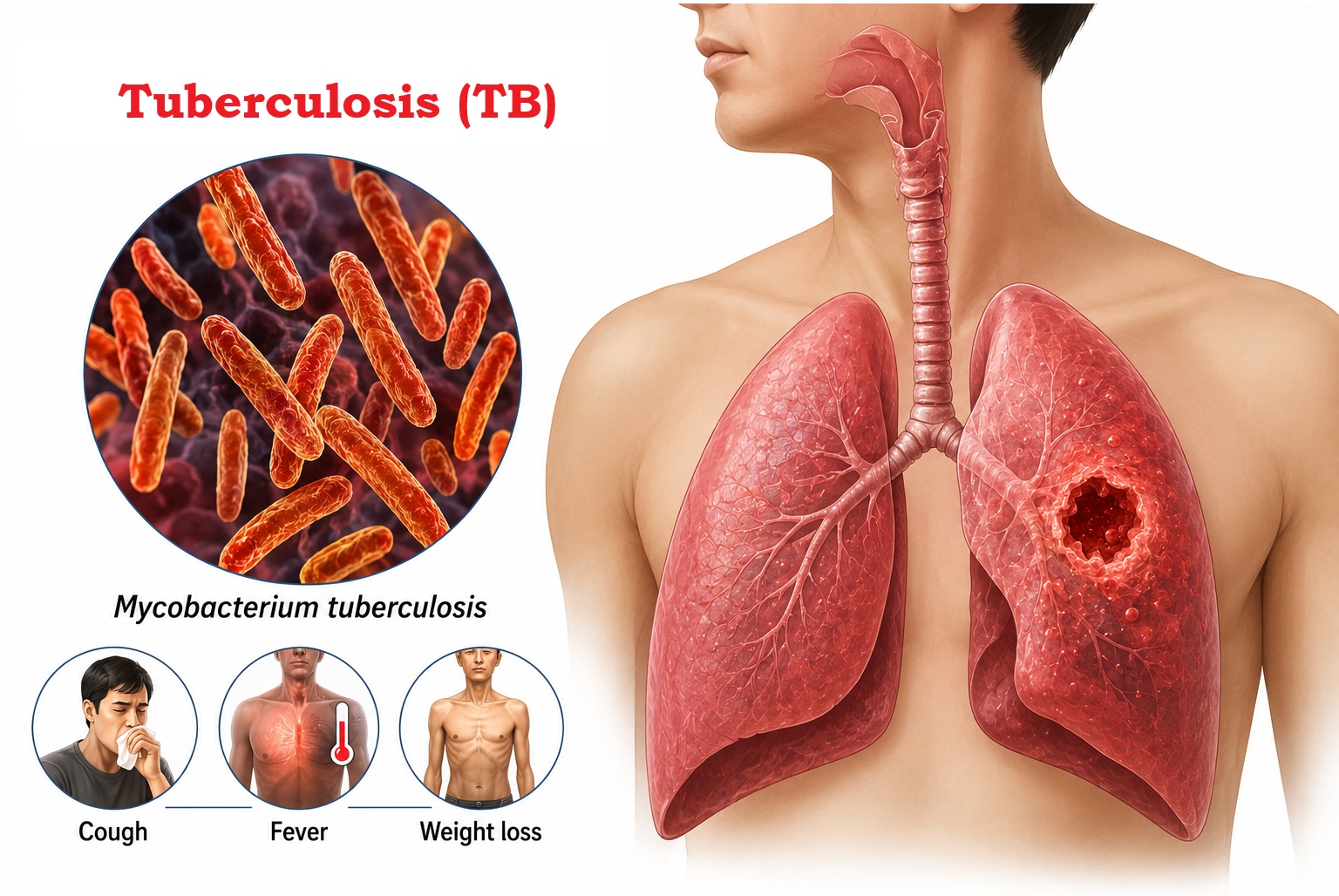
Pulmonary TB classically presents with productive cough lasting more than two weeks, hemoptysis, drenching night sweats, low-grade fever, and progressive weight loss; extrapulmonary forms mimic a range of organ-specific diseases. Diagnosis relies on a multimodal approach including sputum smear microscopy, mycobacterial culture, and WHO-endorsed molecular testing (Xpert MTB/RIF). Standard drug-susceptible TB is treated with the 6-month DOTS regimen (2HRZE/4HR); cure rates exceed 85% with full adherence. Drug-resistant strains—particularly multidrug-resistant TB (MDR-TB), defined as resistance to isoniazid and rifampicin—represent an escalating global threat requiring prolonged second-line regimens.
Classification of Tuberculosis (TB)
The WHO employs a standardized classification framework that guides epidemiological surveillance, treatment stratification, and programmatic response, incorporating anatomical site, bacteriological activity, drug-resistance profile, and HIV co-infection status.
| Category | Key Defining Feature | Clinical Significance |
|---|---|---|
| Pulmonary TB (PTB) | M. tuberculosis involvement of lung parenchyma | Most infectious form; principal driver of community transmission |
| Extrapulmonary TB (EPTB) | TB affecting lymph nodes, pleura, CNS, bone, pericardium, or kidney | Diagnosis challenging; organ-specific complications may be life-threatening |
| Latent TB Infection (LTBI) | Positive TST/IGRA, no symptoms, normal CXR | ~5–10% lifetime reactivation risk; target for preventive therapy |
| Drug-Susceptible TB (DS-TB) | Susceptible to isoniazid and rifampicin | Curable with standard 6-month 2HRZE/4HR regimen |
| Multidrug-Resistant TB (MDR-TB) | Resistance to at least isoniazid and rifampicin | Requires 6-month BPaLM regimen; poorer outcomes |
| Extensively Drug-Resistant TB (XDR-TB) | MDR-TB plus resistance to fluoroquinolones and bedaquiline/linezolid | Very limited therapeutic options; high mortality |
This classification underpins treatment decision-making, contact tracing priorities, and mandatory notification under the International Health Regulations (IHR).
Pathophysiology of Tuberculosis (TB)
The pathophysiology of TB involves a tightly regulated interplay between M. tuberculosis intracellular virulence strategies and the host adaptive immune response, culminating in granuloma formation, caseating necrosis, and—in vulnerable individuals—progressive organ destruction.
1. Entry and Cellular Tropism
- Alveolar macrophage invasion: Droplet nuclei deposit bacilli in alveolar spaces, where complement receptor (CR3/CR4)– and mannose receptor–mediated phagocytosis internalizes M. tuberculosis into macrophages; the bacterium exploits this entry to gain an intracellular niche that initially evades oxidative killing.
- Phagosomal arrest: M. tuberculosis secretes EsxA (ESAT-6) and recruits host kinase PknG to block phagosome–lysosome fusion, permitting intracellular replication within the phagosomal compartment and establishing the primary pulmonary focus.
2. Immune Response and Evasion
- Innate immune activation: TLR2-, TLR4-, and NOD2-mediated pattern recognition triggers macrophage secretion of TNF-α, IL-1β, and IL-12; dendritic cells traffic to regional lymph nodes, initiating adaptive immunity 2–6 weeks post-exposure.
- Granuloma formation: IFN-γ–producing CD4⁺ Th1 cells activate macrophages; concurrently, multinucleated giant cells, epithelioid macrophages, lymphocytes, and fibroblasts coalesce around the bacillary focus to form the hallmark tuberculous granuloma, an immunological containment structure.
3. Organ-Specific Pathology
- Caseous necrosis and cavitation: Sustained hypersensitivity reactions produce central caseous necrosis within granulomas; liquefaction creates oxygen-rich cavities (pO₂ ~150 mmHg) supporting bacterial replication of 10⁷–10⁹ bacilli/mL, driving infectiousness and sputum smear positivity.
4. Systemic Spread and Sequelae
- Miliary dissemination: In immunosuppressed hosts (HIV, CD4⁺ <200 cells/µL; severe malnutrition), granulomatous containment fails and lymphohematogenous spread seeds the meninges, adrenal glands, vertebral bodies (Pott's disease), kidneys, and liver with miliary granulomas, producing multi-organ disease.
This pathophysiological sequence—from phagosomal arrest through cavitation and potential hematogenous dissemination—directly informs therapeutic targets (rifampicin's intracellular sterilizing activity, pyrazinamide's activity in acidic caseous foci) and preventive strategies such as BCG vaccination.
Signs and Symptoms of Tuberculosis (TB)
The clinical manifestations of TB arise primarily from two parallel processes: direct tissue destruction by replicating bacilli and caseating granulomas, and the systemic cytokine-mediated inflammatory response—particularly TNF-α, IL-1β, and IL-6—that drives constitutional features across all anatomical forms.
Key clinical triad of pulmonary TB:
- Productive cough >2 weeks (bronchial irritation and mucopurulent secretions from cavitary disease)
- Hemoptysis (erosion of bronchial vessels adjacent to cavities, or Rasmussen aneurysm rupture)
- Constitutional symptoms (TNF-α–mediated fever, night sweats, and progressive weight loss)
1. Constitutional Symptoms
- Fever: Low-grade (37.5–38.5°C), classically peaking in the afternoon or evening; mediated by IL-1β and TNF-α from activated macrophages; present in >80% of active pulmonary TB cases and virtually 100% of miliary TB.
- Night sweats: Profuse, drenching nocturnal diaphoresis soaking clothing and bedding; driven by cytokine-induced hypothalamic thermoregulatory disruption; a classic red-flag symptom warranting TB evaluation in endemic settings.
- Weight loss and cachexia: Progressive loss—often ≥10% body weight over weeks to months—driven by TNF-α–mediated anorexia and hypermetabolism; independently predicts poorer treatment outcomes and higher relapse rates.
- Fatigue: Universal, non-specific; reflects sustained immune activation and nutritional depletion; precedes respiratory symptoms by weeks in many cases.
2. Respiratory Symptoms
- Cough: Initially dry, evolving to productive with mucopurulent or blood-streaked sputum; the WHO 2022 case-finding guidelines classify any cough ≥2 weeks in a high-burden region as a "presumptive TB case" mandating sputum investigation.
- Hemoptysis: Ranges from blood-streaked sputum (mild, from inflamed bronchial mucosa) to massive hemoptysis >200 mL/24 hours (life-threatening, from erosion of large pulmonary vessels within cavities); occurs in 20–30% of smear-positive pulmonary TB patients.
- Dyspnea: Progressive exertional dyspnea with extensive parenchymal involvement, large pleural effusion, or miliary dissemination; sudden-onset dyspnea suggests spontaneous pneumothorax from ruptured subpleural cavity—a surgical emergency.
- Chest pain: Pleuritic (sharp, positional) in pleuropulmonary TB with pleural inflammation; dull retrosternal pain may reflect mediastinal lymphadenopathy compressing mediastinal structures.
3. Lymphatic Manifestations (Scrofula)
- Cervical lymphadenopathy: The most common extrapulmonary form; presents as painless, firm, matted cervical or supraclavicular lymph nodes that may fluctuate, develop a collar-stud abscess, and discharge caseous material; accounts for ~35% of extrapulmonary TB cases.
- Mediastinal lymphadenopathy: Paratracheal or hilar lymph node enlargement compresses the trachea or bronchi, causing stridor or obstructive pneumonia, particularly in children; best visualized on CT thorax.
4. Neurological Symptoms (TB Meningitis)
- Headache: The most common presenting complaint in TB meningitis; insidious onset, progressively severe, reflecting meningeal irritation from basal exudate; virtually universal at presentation.
- Neck stiffness and cranial nerve palsies: Meningismus with positive Kernig's and Brudzinski's signs; basilar exudate damages CN III (ptosis, mydriasis), CN VI (lateral gaze palsy), and CN VII (facial asymmetry).
- Altered consciousness and seizures: Late complications reflecting cerebral vasculitis, infarction, or obstructive hydrocephalus; GCS ≤12 at presentation predicts mortality >50% despite treatment.
5. Musculoskeletal Symptoms (Pott's Disease)
- Back pain: The cardinal feature of spinal TB, most commonly affecting the lower thoracic vertebrae (T10–L1); characteristically insidious, dull, and progressive; local tenderness, kyphotic deformity (gibbus), and paraspinal soft tissue swelling are important examination findings.
- Paraplegia: Cord compression from epidural abscess or vertebral collapse; affects 10–30% of spinal TB cases; urgent MRI is mandatory to define the extent of cord compromise before surgical or medical intervention.
Causes and Risk Factors of Tuberculosis (TB)
The transition from M. tuberculosis exposure to active TB disease is determined by the balance between modifiable risk factors—including HIV co-infection, malnutrition, diabetes, tobacco use, and poverty—and non-modifiable determinants such as genetic susceptibility to mycobacterial disease and prior immune sensitization; understanding this risk landscape is foundational to targeted preventive therapy and case-finding strategies.
1. Zoonotic and Environmental Exposure
- Household contact with active pulmonary TB: Close contact with a sputum smear-positive case confers a 15–22% risk of M. tuberculosis infection and a 5–10% cumulative lifetime risk of active TB; risk is amplified 2- to 5-fold in overcrowded households with <6 air changes per hour.
- Congregate settings: Prisons, homeless shelters, and migrant worker dormitories sustain 10- to 50-fold higher TB transmission rates than community settings; the WHO estimates that ~6% of global TB burden is attributable to incarceration.
2. Occupational Risk
- Healthcare workers (HCWs): HCWs in high-burden settings face M. tuberculosis infection rates 2–3 times that of the general population; aerosol-generating procedures (bronchoscopy, sputum induction, intubation) without N95 respirators constitute the highest-risk occupational exposure.
- Silica-exposed workers (miners): Silicosis increases TB risk by 2.8- to 39-fold (Corbett et al., 2000, systematic review), mediated by impaired macrophage mycobacterial killing and phagosomal dysfunction from silica particle accumulation; South African gold miners carry the world's highest TB-silicosis co-burden.
3. Host Factors
- HIV co-infection: The single most potent individual risk factor; HIV-infected individuals face a 20–37-fold elevated active TB risk compared with HIV-negative individuals (WHO 2023), rising to >10% annual incidence when CD4⁺ count falls below 200 cells/µL, as IFN-γ–mediated granulomatous containment collapses.
- Diabetes mellitus: Poorly controlled type 2 diabetes (HbA1c >8%) confers a 3-fold increased TB risk through impaired neutrophil chemotaxis, reduced macrophage IFN-γ responsiveness, and hyperglycemia-driven intracellular bacterial replication; the TB-diabetes co-epidemic is expanding rapidly across South and South-East Asia.
- Malnutrition (BMI <18.5 kg/m²): Protein-energy malnutrition impairs T-cell proliferation, NK-cell activity, and mucosal immune barriers; TB risk is elevated 3- to 4-fold in severely malnourished populations, with a WHO-estimated global attributable fraction of 27%.
- Immunosuppressive therapy: TNF-α inhibitors (infliximab, adalimumab) confer a 4- to 25-fold elevated TB reactivation risk; NICE and ACR guidelines mandate LTBI screening and preventive therapy before commencing biologic agents.
4. Geographic and Socioeconomic Factors
- High-burden country of origin: Eight countries—India, Indonesia, China, the Philippines, Pakistan, Nigeria, Bangladesh, and the DRC—account for >67% of global TB incidence; LTBI prevalence among adults born in these regions may reach 40–70% in older cohorts.
- Poverty and social deprivation: WHO estimates that 95% of TB deaths occur in low- and middle-income countries; poverty clusters biological risk factors (overcrowding, malnutrition, reduced healthcare access) and is independently associated with delayed diagnosis, treatment default, and acquired drug resistance.
- Tobacco smoking: Active smoking increases TB incidence approximately 2-fold and doubles TB mortality through impaired mucociliary clearance, reduced macrophage phagocytic activity, and downregulation of Th1 cytokine responses; the WHO estimates 20% of global TB incidence is attributable to tobacco.
Diagnosis of Tuberculosis (TB)
The diagnosis of TB requires a multimodal approach integrating clinical assessment with microbiological, molecular, serological, and radiological investigations, guided by the WHO 2022 Consolidated Guidelines on Tuberculosis Diagnostics and the ATS/CDC/IDSA 2016 Clinical Practice Guidelines for the Treatment of Drug-Susceptible Tuberculosis.
1. Clinical Examination
A. General Physical Exam
- Fever and tachycardia: Vital signs reflecting systemic inflammation; fever >38°C combined with cough >2 weeks and weight loss in an endemic region warrants immediate sputum investigation under the WHO presumptive TB case definition.
- BMI and nutritional status: Underweight (BMI <18.5 kg/m²) and >10% unintentional weight loss are independent predictors of active TB and guide adjunctive nutritional management.
B. System-Specific Exam
- Chest auscultation: Localized crackles (upper lobes, where pO₂ is highest), bronchial breathing over consolidated areas, amphoric breath sounds over large cavities, and stony dullness with absent breath sounds indicating pleural effusion.
- Lymph node palpation: Systematic examination of cervical, axillary, and inguinal chains; firm, matted, fluctuant nodes suggest lymph node TB; fine-needle aspiration cytology (FNAC) and culture are indicated for extrapulmonary diagnosis.
2. Laboratory Investigations
A. Sputum Smear Microscopy (AFB Smear)
- Ziehl-Neelsen (ZN) or auramine-rhodamine fluorescence staining: WHO-recommended initial investigation for presumptive pulmonary TB; sensitivity 50–70% in HIV-negative patients (falling to 30% in HIV-positive patients); specificity 95–99%; requires minimum two sputum specimens (one early morning, one spot).
B. Mycobacterial Culture
- Liquid culture (MGIT 960 system): Gold standard for TB diagnosis; sensitivity 80–90%, specificity >99%; permits comprehensive drug susceptibility testing (DST); turnaround 10–14 days for liquid medium versus 28–42 days for solid Löwenstein-Jensen medium.
C. Drug Susceptibility Testing (DST)
- Critical MIC breakpoints: Isoniazid (≥0.2 µg/mL), rifampicin (≥1.0 µg/mL), ethambutol (≥5 µg/mL), pyrazinamide (≥100 µg/mL); DST results classify isolates as DS-TB, MDR-TB, or pre-XDR/XDR-TB, guiding regimen selection.
3. Advanced / Molecular / Serological Testing
| Test | Sensitivity | Specificity | Turnaround | Comment |
|---|---|---|---|---|
| Xpert MTB/RIF Ultra | 87–91% (smear-positive); 63% (smear-negative) | 98–99% | 2 hours | Simultaneous MTBC detection and rifampicin resistance; WHO first-line recommendation |
| Tuberculin Skin Test (TST/Mantoux) | 70–80% | 59–97% | 48–72 hours | Cross-reactive with BCG and NTM; positive ≥10 mm (immunocompetent), ≥5 mm (HIV+) |
| Interferon-Gamma Release Assay (IGRA) | 80–90% | 95–99% | 24 hours | Not BCG cross-reactive; preferred for LTBI diagnosis in immunocompetent adults |
| Urine LF-LAM (lateral flow) | 42% (HIV+, CD4 <200 cells/µL) | 91% | 25 minutes | WHO-recommended for HIV-positive hospitalized patients with CD4 <200 cells/µL |
| Line Probe Assay (LPA / Hain GenoType MTBDRplus) | 97–99% (smear-positive) | >99% | 5 hours | Rapid rpoB (rifampicin) and katG/inhA (isoniazid) mutation detection |
4. Imaging and Ancillary Investigations
- Chest X-ray (CXR): First-line imaging; classic post-primary TB findings include upper-lobe fibronodular infiltrates, thick-walled cavitation (apical-posterior segments), bilateral infiltrates, and a miliary pattern (1–2 mm uniform micronodules) indicating disseminated disease.
- CT thorax: High-resolution CT (HRCT) detects early parenchymal disease, subtle cavitation, mediastinal lymphadenopathy, and bronchiectasis with greater sensitivity than CXR; indicated in immunosuppressed patients, atypical presentations, or to guide bronchoscopy.
- MRI brain/spine: Gadolinium-enhanced MRI is the preferred modality for CNS TB, demonstrating basal meningeal enhancement, tuberculoma, cerebral vasculitis, communicating hydrocephalus, and spinal cord compression in Pott's disease with superior sensitivity to CT.
5. WHO Case Definitions
- Bacteriologically confirmed TB: Positive culture, smear, or molecular test for MTBC, regardless of clinical findings; triggers mandatory notification and DST.
- Clinically diagnosed TB: Meets clinical and radiological criteria without bacteriological confirmation; treatment commenced on clinical judgment, with repeated bacteriological attempts mandatory.
Complications of Tuberculosis (TB)
TB generates two distinct complication categories: those arising directly from the destructive granulomatous and necrotic tissue injury of progressive M. tuberculosis infection, and iatrogenic toxicities attributable to prolonged exposure to the first-line multidrug regimen; both categories are significant contributors to morbidity and mortality in TB-endemic settings.
A. Disease-Related Complications
- Tuberculous Meningitis (TBM): TBM results from hematogenous seeding of the meninges or rupture of a subependymal tuberculoma into the subarachnoid space, triggering exudative basilar meningitis. The clinical presentation follows a 1–2-week prodrome of headache, fever, and malaise that progresses to meningism, cranial nerve palsies (CN III, VI, VII), communicating hydrocephalus, and cerebral vasculitis producing infarcts in the basal ganglia. CSF reveals lymphocytic pleocytosis (50–500 cells/µL), elevated protein (>0.45 g/L), and low glucose (CSF:serum ratio <0.5). Despite treatment with standard anti-TB drugs plus adjunctive dexamethasone—which the MRC Vietnam TBM trial (Thwaites et al., N Engl J Med 2004) showed reduced 9-month mortality from 41% to 31%—overall mortality remains 25–40%, with severe neurological disability in up to 50% of survivors.
- Miliary Tuberculosis: Miliary TB arises from failure of granulomatous containment in immunosuppressed hosts, producing overwhelming hematogenous dissemination and the characteristic 1–2 mm "millet-seed" nodules throughout both lungs on CXR and CT. Multiorgan involvement encompasses the liver (transaminitis, hepatomegaly), bone marrow (pancytopenia, leukemoid reaction), adrenal glands (cortisol insufficiency), spleen, choroid (choroidal tubercles—pathognomonic on fundoscopy), and meninges. Mortality ranges from 15–25% in treated patients, rising to >50% when diagnosis is delayed beyond 4 weeks; early empirical treatment in high-risk immunosuppressed patients is justified while diagnostic confirmation is pending.
- Tuberculous Empyema: Empyema thoracis complicates TB when a peripheral cavity ruptures into the pleural space or lymph node disease extends directly; pleural fluid is characteristically exudative with protein >3 g/dL, lymphocyte predominance >80%, and elevated adenosine deaminase (ADA >40 IU/L; sensitivity 92%, specificity 90%). Untreated, progressive fibrin deposition leads to organized empyema, trapped lung, and permanent restrictive deficit. Management combines anti-TB chemotherapy with pleural drainage; surgical decortication is required for organized disease with functional impairment.
- Adrenal Insufficiency (Addison's Disease): Bilateral caseating granulomatous destruction of the adrenal glands was historically the leading cause of Addison's disease in TB-endemic regions (~7–10% of adrenal insufficiency cases). Gradual loss of cortisol and aldosterone produces fatigue, weight loss, hyperpigmentation, hyponatremia (<135 mEq/L), and postural hypotension; unrecognized adrenal crisis precipitates life-threatening circulatory collapse. CT demonstrates bilateral adrenal enlargement with central hypodense necrosis, progressing to calcification in chronic disease.
B. Treatment-Related Complications
- Drug-Induced Liver Injury (DILI) / Hepatotoxicity: Isoniazid, rifampicin, and pyrazinamide are all hepatotoxic; the combined first-line regimen produces clinically significant DILI (ALT >3× ULN with symptoms, or >5× ULN asymptomatically) in 2–5% of patients. Risk is amplified by pre-existing liver disease, alcohol use, slow-acetylator NAT2 polymorphism, age >35 years, and HIV co-infection. Baseline LFTs and monthly clinical monitoring are recommended; ALT rise >3× ULN with symptoms mandates temporary cessation of all hepatotoxic drugs and sequential re-challenge after normalization.
- Peripheral Neuropathy (Isoniazid-Induced): Isoniazid competitively inhibits pyridoxal phosphokinase, depleting active pyridoxal-5-phosphate (vitamin B₆), causing a predominantly sensory peripheral neuropathy (burning, tingling, stocking-glove distribution) in 2–20% of patients. Risk groups include malnourished patients, alcoholics, diabetics, HIV-positive individuals, pregnant women, and slow acetylators; pyridoxine (vitamin B₆) 25–50 mg/day is recommended prophylactically for all high-risk patients on isoniazid.
- Optic Neuritis (Ethambutol-Induced): Ethambutol causes dose- and duration-dependent toxic optic neuropathy through zinc chelation and mitochondrial dysfunction in optic nerve axons; incidence rises from <1% at 15 mg/kg/day to 5–6% at 25 mg/kg/day. Patients develop insidious central scotoma, loss of color discrimination (red-green dyschromatopsia), and reduced visual acuity. Symptoms are generally reversible with prompt cessation. Monthly visual acuity and Ishihara color-plate testing are mandatory; ethambutol is contraindicated in children too young to reliably report visual changes.
Treatment of Tuberculosis (TB)
TB treatment follows a standardized, phase-based pharmacological strategy determined by drug-susceptibility profiles, HIV status, disease site, and severity, with the overarching objective of achieving bacteriological cure, preventing relapse, halting transmission, and averting acquired drug resistance through the WHO-endorsed DOTS (Directly Observed Therapy, Short-course) framework.
Key principle: The cornerstone of DS-TB treatment is the WHO-recommended 6-month regimen comprising a 2-month intensive phase of isoniazid (H), rifampicin (R), pyrazinamide (Z), and ethambutol (E), followed by a 4-month continuation phase of isoniazid and rifampicin (2HRZE/4HR)—administered under direct observation throughout—with any unsanctioned interruption or modification risking treatment failure and the emergence of drug resistance.
A. Intensive Phase (Months 1–2): First-Line Combination Therapy
- Isoniazid (H), 5 mg/kg/day (max 300 mg/day): Bactericidal against rapidly multiplying extracellular bacilli; inhibits mycolic acid biosynthesis via InhA enzyme after activation by catalase-peroxidase (KatG); pyridoxine co-administration is recommended for high-risk groups to prevent peripheral neuropathy.
- Rifampicin (R), 10 mg/kg/day (max 600 mg/day): The most critical sterilizing drug; inhibits bacterial RNA polymerase (rpoB subunit); potent CYP3A4 inducer—reduces plasma levels of antiretrovirals, oral contraceptives, and warfarin; rifabutin is substituted in patients on boosted antiretroviral therapy (ART) to minimize pharmacokinetic interactions.
- Pyrazinamide (Z), 25 mg/kg/day (max 2 g/day): Active in acidic environments (caseous foci, pH 5.5–6.0); converted by pyrazinamidase to pyrazinoic acid, which disrupts mycobacterial fatty acid synthesis; responsible for enabling treatment shortening from 9 to 6 months, as demonstrated by the British Medical Research Council TB trials (1976–1984).
- Ethambutol (E), 15 mg/kg/day: Bacteriostatic; inhibits arabinosyl transferase (embCAB operon), disrupting arabinogalactan synthesis; included to protect rifampicin from acquired resistance during the intensive phase.
B. Continuation Phase (Months 3–6): HR
The 4HR continuation phase targets residual semi-dormant bacilli in healing granulomas. WHO 2023 reports global treatment success rates of 85–88% for DS-TB with 2HRZE/4HR. Extension to 9 months (2HRZE/7HR) is recommended for TB meningitis, bone and joint TB, and disseminated disease given higher relapse risk.
C. Treatment of Drug-Resistant TB (MDR/XDR-TB)
- BPaLM regimen (Bedaquiline, Pretomanid, Linezolid, Moxifloxacin): The WHO 2022 Rapid Communication endorses BPaLM as the preferred 6-month regimen for MDR-TB, based on the ZeNix trial (Dorman et al., N Engl J Med 2022), which demonstrated 89% treatment success at 26 weeks using optimized linezolid dosing; bedaquiline inhibits mycobacterial ATP synthase (atpE subunit), with QTc prolongation monitored by serial ECG.
- Delamanid (200 mg/day): A nitroimidazole inhibiting mycolic acid biosynthesis; approved by EMA for MDR-TB when bedaquiline is contraindicated; combined with optimized background regimens.
D. Preventive Treatment for LTBI
- 6H (Isoniazid 5 mg/kg/day × 6 months): Standard LTBI treatment; reduces progression to active TB by 60–90% in IGRA/TST-positive individuals; WHO recommends for all HIV-positive individuals regardless of IGRA/TST result, and for household contacts aged <5 years exposed to smear-positive index cases.
- 3HP (Isoniazid + Rifapentine, once-weekly × 12 weeks): The PREVENT-TB trial (Sterling et al., N Engl J Med 2011) demonstrated non-inferior efficacy to 9H with significantly higher completion rates (82% vs 69%); preferred in resource-adequate settings per CDC/ATS 2020 guidance.
Prevention of Tuberculosis (TB)
Primary prevention of TB is achievable through neonatal BCG vaccination and chemoprophylaxis in high-risk individuals; however, the enormous global LTBI reservoir—estimated at 1.7 billion people by WHO—means that secondary prevention through active case-finding, LTBI treatment, and rigorous infection control is equally essential to reducing incident TB by the 90% targeted in the WHO End TB Strategy (2023–2030).
A. Environmental Controls
- Natural ventilation and building design: WHO 2009 Infection Control Guidelines recommend ≥12 air changes per hour in TB isolation rooms and wards; cross-ventilation through open windows in tropical settings substantially reduces indoor droplet nuclei concentration; architectural standards mandating natural light and ventilation are incorporated into WHO-approved facility designs for high-burden countries.
- Ultraviolet germicidal irradiation (UVGI): Upper-room UVGI systems (254 nm wavelength) reduce viable M. tuberculosis aerosol concentrations equivalently to 12+ air changes per hour; recommended by CDC as a supplementary airborne precaution in healthcare facilities with fixed low air exchange rates in high-burden settings.
B. Surveillance and Early Case Detection
- Active TB case-finding: Systematic screening of high-risk groups (HIV-positive individuals, household contacts, prisoners, miners, and healthcare workers) with chest X-ray and/or Xpert MTB/RIF increases case detection yield 2- to 3-fold versus passive surveillance; the WHO 2023 Action Framework targets diagnosis of ≥90% of estimated TB cases globally by 2027.
- Universal drug susceptibility testing (uDST): WHO recommends Xpert MTB/RIF or LPA as the initial diagnostic test for all presumptive TB patients, enabling concurrent resistance profiling and preventing inappropriate regimens that amplify drug resistance.
C. High-Risk Population Strategies
- LTBI screening and preventive therapy: All HIV-positive individuals should receive annual IGRA/TST screening and isoniazid or 3HP preventive therapy regardless of test result, per WHO 2018 LTBI Guidelines; household contacts of smear-positive cases aged <5 years receive isoniazid for 6 months following exclusion of active disease.
- ART for HIV co-infected individuals: The INSIGHT START trial (2015, N Engl J Med) demonstrated a 72% reduction in TB incidence with immediate versus deferred ART in HIV-positive adults, irrespective of CD4 count—establishing the imperative for universal early ART initiation as both TB prevention and HIV care.
D. Infection Prevention and PPE
- N95 respirator use: Healthcare workers performing aerosol-generating procedures on suspected or confirmed pulmonary TB patients must use fit-tested N95 (FFP2) respirators—not standard surgical masks—which filter ≥95% of particles ≥0.3 µm, including M. tuberculosis droplet nuclei.
- Airborne isolation precautions: Suspected active pulmonary TB patients should be placed in negative-pressure isolation rooms (12 air changes/hour; air exhausted to exterior or HEPA-filtered) per CDC/WHO healthcare infection control guidelines; rapid microbiological confirmation enables safe de-isolation of lower-risk patients.
E. Vaccine and Research Pipeline
- BCG vaccine: The Bacillus Calmette-Guérin (BCG) vaccine—a live attenuated Mycobacterium bovis strain—provides 70–80% protection against severe disseminated TB (meningeal and miliary forms) in children under 5 years and approximately 50% protection against pulmonary TB in high-burden settings; WHO recommends universal BCG at birth in all high-incidence countries.
- M72/AS01E candidate vaccine: Phase IIb trial (Van der Meeren et al., N Engl J Med 2018) demonstrated 49.7% efficacy against active pulmonary TB in LTBI-positive HIV-negative adults in sub-Saharan Africa; Phase III efficacy trials are ongoing, representing the most advanced post-BCG TB vaccine candidate to date.
Common FAQs on Tuberculosis (TB)
1. What is tuberculosis and what causes it?
Tuberculosis is a chronic granulomatous infection caused by Mycobacterium tuberculosis, transmitted via airborne droplet nuclei expelled by individuals with active pulmonary disease. Only 5–10% of those infected develop active disease; the majority harbor latent TB infection (LTBI), in which the organism persists in a dormant, contained state. Progression is strongly promoted by immune suppression—particularly HIV co-infection, malnutrition, and immunosuppressive therapy.
2. How does tuberculosis spread?
TB is transmitted exclusively via inhalation of droplet nuclei (<5 µm) generated during coughing or talking by individuals with active pulmonary TB; these particles remain airborne for hours in poorly ventilated spaces. Casual contact—handshaking, shared utensils, or surfaces—does not transmit M. tuberculosis. Extrapulmonary forms are not infectious under ordinary circumstances. Smear-positive pulmonary cases are substantially more infectious than smear-negative patients.
3. What are the earliest warning signs of tuberculosis?
Early symptoms are non-specific and include persistent cough lasting more than two weeks, low-grade afternoon fever, unexplained weight loss of ≥5% body weight over 4–6 weeks, drenching night sweats, and progressive fatigue. WHO 2022 case-finding guidelines classify any cough ≥2 weeks in a high-burden region as a "presumptive TB case" requiring immediate sputum investigation. Hemoptysis is a later, more specific symptom indicating advanced cavitary pulmonary disease.
4. How is tuberculosis diagnosed?
Active pulmonary TB is confirmed using Xpert MTB/RIF Ultra on sputum—the WHO-endorsed molecular test that simultaneously detects M. tuberculosis and rifampicin resistance within 2 hours. Sputum smear microscopy (AFB stain) is a complementary low-cost investigation. Liquid culture (MGIT) remains the gold standard (10–14 days). Chest X-ray provides radiological support. For latent TB, IGRA (QuantiFERON-TB Gold Plus) or tuberculin skin test (TST) detects prior sensitization without bacteriological confirmation.
5. What is the difference between latent and active tuberculosis?
In latent TB infection (LTBI), M. tuberculosis persists in a dormant, immunologically contained state; the individual has no symptoms, is not infectious, and CXR is typically normal—detectable only by TST or IGRA. Active TB involves replicating bacteria causing tissue destruction, overt clinical symptoms, and—in pulmonary disease—the capacity to transmit infection. LTBI carries a 5–10% lifetime reactivation risk in immunocompetent individuals, rising to ~10% per year in HIV-positive patients with CD4⁺ <200 cells/µL.
6. How is drug-susceptible tuberculosis treated?
DS-TB is treated with the 6-month DOTS regimen—a 2-month intensive phase of isoniazid, rifampicin, pyrazinamide, and ethambutol (2HRZE), then 4 months of isoniazid and rifampicin (4HR)—under direct observation. MDR-TB requires the 6-month BPaLM regimen (bedaquiline, pretomanid, linezolid, moxifloxacin) per WHO 2022 guidelines. Treatment interruption risks relapse and amplification of drug resistance.
7. Can tuberculosis be permanently cured?
Yes—DS-TB is highly curable when treatment is completed as prescribed, with global treatment success rates of 85–88% (WHO 2023) and relapse in <5% of fully adherent patients. MDR-TB achieves ~60–65% global treatment success. HIV co-infection reduces success rates but responds well to concurrent antiretroviral therapy. TB meningitis and miliary TB carry higher mortality (25–40%) but are curable when diagnosed promptly; delayed treatment is the principal driver of poor outcomes.
8. Who is at highest risk of developing active tuberculosis?
Priority risk groups include: HIV-positive individuals (20–37-fold elevated risk, particularly CD4⁺ <200 cells/µL); patients on TNF-α inhibitors (4–25-fold risk); solid organ transplant recipients; those with poorly controlled type 2 diabetes (3-fold risk); severely malnourished individuals (BMI <18.5 kg/m²; 3–4-fold risk); infants and children under 5 years; and the elderly. Healthcare workers, prisoners, miners, and household contacts of smear-positive index cases are additional priority groups for systematic LTBI screening and preventive therapy.
9. How is tuberculosis effectively prevented?
BCG vaccination at birth provides 70–80% protection against severe disseminated TB in children and is universally recommended in high-burden countries. Preventive therapy—isoniazid 6 months, or isoniazid plus rifapentine weekly for 12 weeks—reduces LTBI progression by 60–90% in IGRA-positive individuals and all HIV-positive persons. Airborne infection control in healthcare facilities (N95 respirators, negative-pressure isolation, adequate ventilation) reduces nosocomial transmission. Early case-finding and prompt treatment under DOTS remain the most impactful community-level strategies.
10. When should a patient with suspected tuberculosis seek emergency care?
Immediate emergency evaluation is warranted for: massive hemoptysis (>200 mL/24 hours) risking asphyxiation from cavitary vascular erosion; sudden severe dyspnea or pleuritic chest pain suggesting tension pneumothorax; progressive headache with neck stiffness, cranial nerve palsies, or altered consciousness indicating TB meningitis—requiring urgent CSF analysis and dexamethasone; cardiovascular collapse from pericardial tamponade in TB pericarditis; or septic shock in the context of miliary TB. Each of these constitutes a life-threatening emergency demanding immediate hospitalization.
Bibliography on Tuberculosis (TB)
- World Health Organization. Global Tuberculosis Report 2023. WHO Press, Geneva. 2023.
- Nahid P, Dorman SE, Alipanah N, et al. Official ATS/CDC/IDSA Guidelines: Treatment of Drug-Susceptible Tuberculosis. Clin Infect Dis. 2016;63(7):e147–e195.
- Dorman SE, Nahid P, Kurbatova EV, et al. Four-Month Rifapentine Regimens with or without Moxifloxacin for Tuberculosis. N Engl J Med. 2021;384(18):1705–1718.
- Nahid P, Mase SR, Migliori GB, et al. Treatment of Drug-Resistant Tuberculosis: ATS/CDC/ERS/IDSA Clinical Practice Guideline. Am J Respir Crit Care Med. 2019;200(10):e93–e142.
- Thwaites GE, Nguyen DB, Nguyen HD, et al. Dexamethasone for the Treatment of Tuberculous Meningitis. N Engl J Med. 2004;351(17):1741–1751.
- Van der Meeren O, Hatherill M, Nduba V, et al. Phase 2b Controlled Trial of M72/AS01E Vaccine to Prevent Tuberculosis. N Engl J Med. 2018;379(17):1621–1634.
- INSIGHT START Study Group. Initiation of Antiretroviral Therapy in Early Asymptomatic HIV Infection. N Engl J Med. 2015;373(9):795–807.
- Sterling TR, Villarino ME, Borisov AS, et al. Three Months of Rifapentine and Isoniazid for Latent Tuberculosis Infection. N Engl J Med. 2011;365(23):2155–2166.
- World Health Organization. WHO Consolidated Guidelines on Tuberculosis, Module 1: Prevention — Tuberculosis Preventive Treatment. WHO, Geneva. 2020.
- Mandell GL, Bennett JE, Dolin R, eds. Mandell, Douglas, and Bennett's Principles and Practice of Infectious Diseases, 9th ed. Elsevier, Philadelphia. 2020.