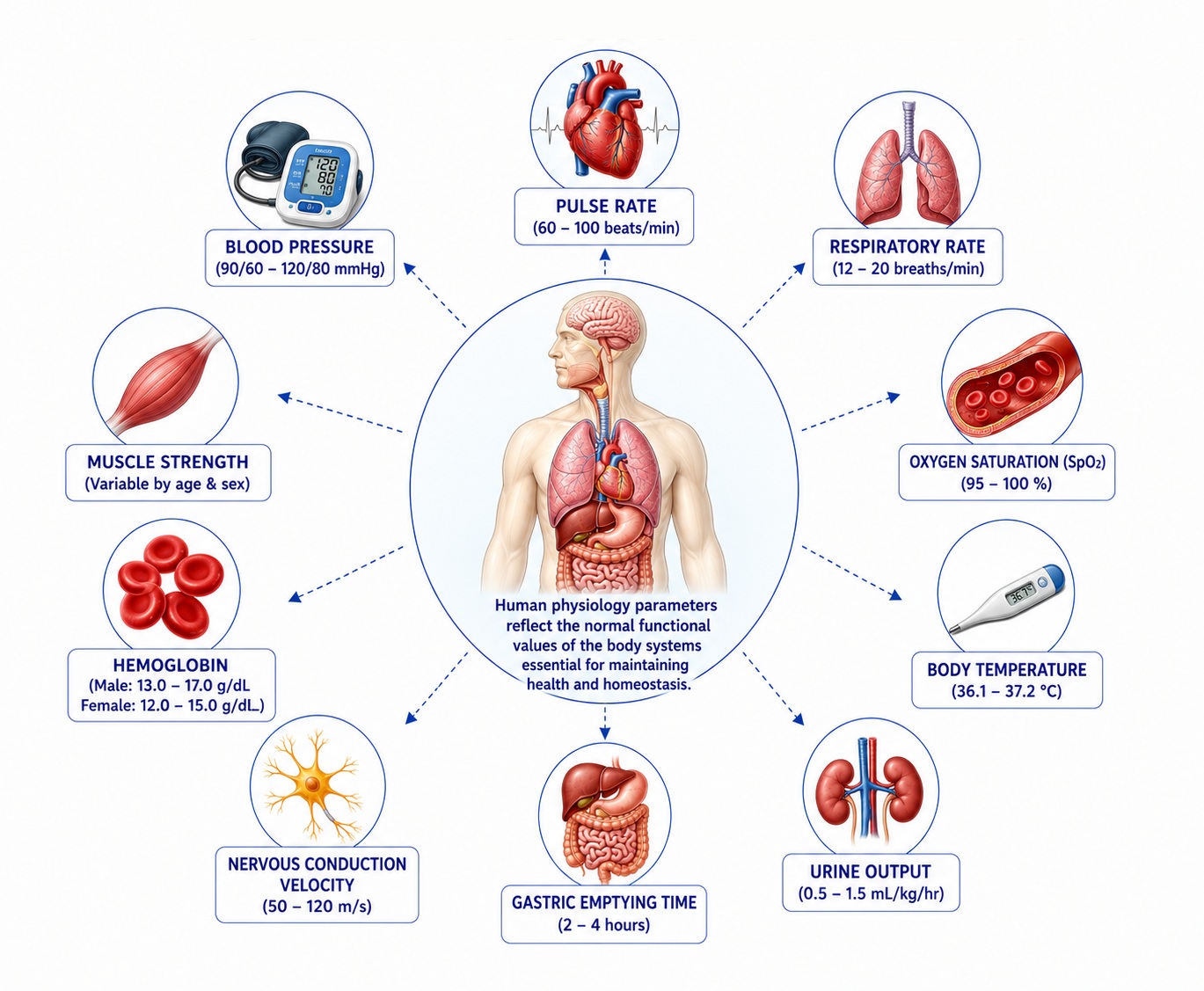
Human Physiology is the scientific study of the normal functions, mechanisms, and regulatory processes that maintain homeostasis within the human body. Physiological reference values serve as fundamental benchmarks for assessing organ function, cellular activity, metabolic regulation, neural communication, endocrine signaling, cardiovascular performance, respiratory efficiency, renal homeostasis, gastrointestinal function, reproductive physiology, and systemic integration. These values are derived from healthy populations and represent the normal operating ranges of physiological systems under resting conditions. Variations may occur due to age, sex, ethnicity, environmental factors, circadian rhythms, physical activity, altitude, pregnancy, and laboratory methodology.
Cellular Physiology Parameters
Cellular physiology forms the basis of all organ functions and physiological regulation.
Cell Membrane and Intracellular Parameters
| Parameter |
Normal Value |
| Resting Membrane Potential (Neuron) |
−70 mV |
| Resting Membrane Potential (Skeletal Muscle) |
−90 mV |
| Intracellular pH |
7.0–7.2 |
| Extracellular pH |
7.35–7.45 |
| Cell Diameter (Average Human Cell) |
10–30 μm |
| Total Body Cells |
30–40 Trillion |
Body Water Distribution
| Compartment |
Percentage of Body Weight |
| Total Body Water |
50–60% |
| Intracellular Fluid |
40% |
| Extracellular Fluid |
20% |
| Plasma Volume |
5% |
| Interstitial Fluid |
15% |
Blood and Circulatory Physiology
Blood Volume
| Parameter |
Normal Value |
| Adult Male |
70–75 mL/kg |
| Adult Female |
65–70 mL/kg |
| Average Adult |
4.5–6.0 L |
Plasma Parameters
| Parameter |
Normal Value |
| Plasma Volume |
2.5–3.5 L |
| Plasma Osmolality |
275–295 mOsm/kg |
| Plasma Specific Gravity |
1.025–1.029 |
| Plasma Proteins |
6–8 g/dL |
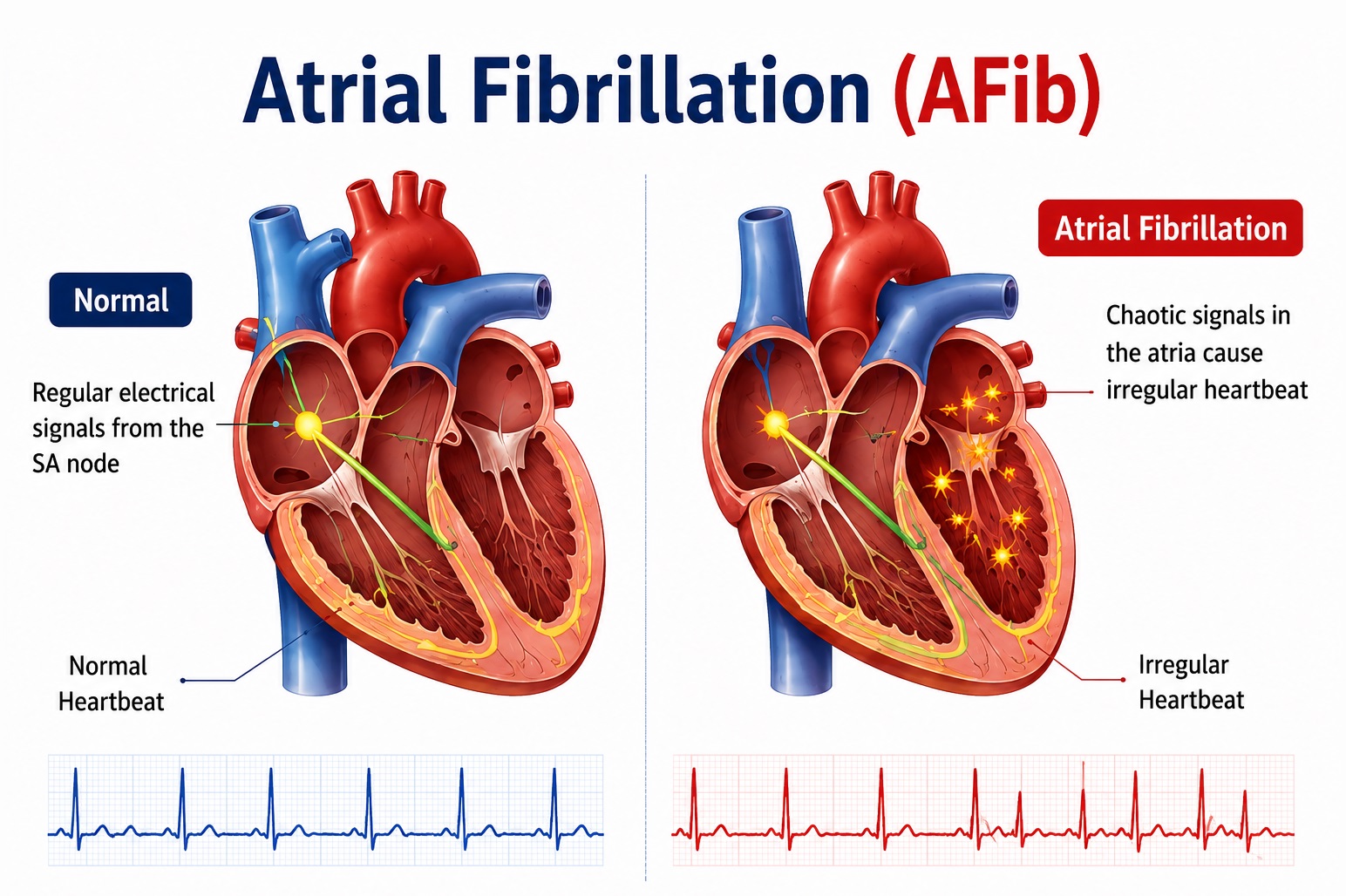
Cardiovascular Physiology
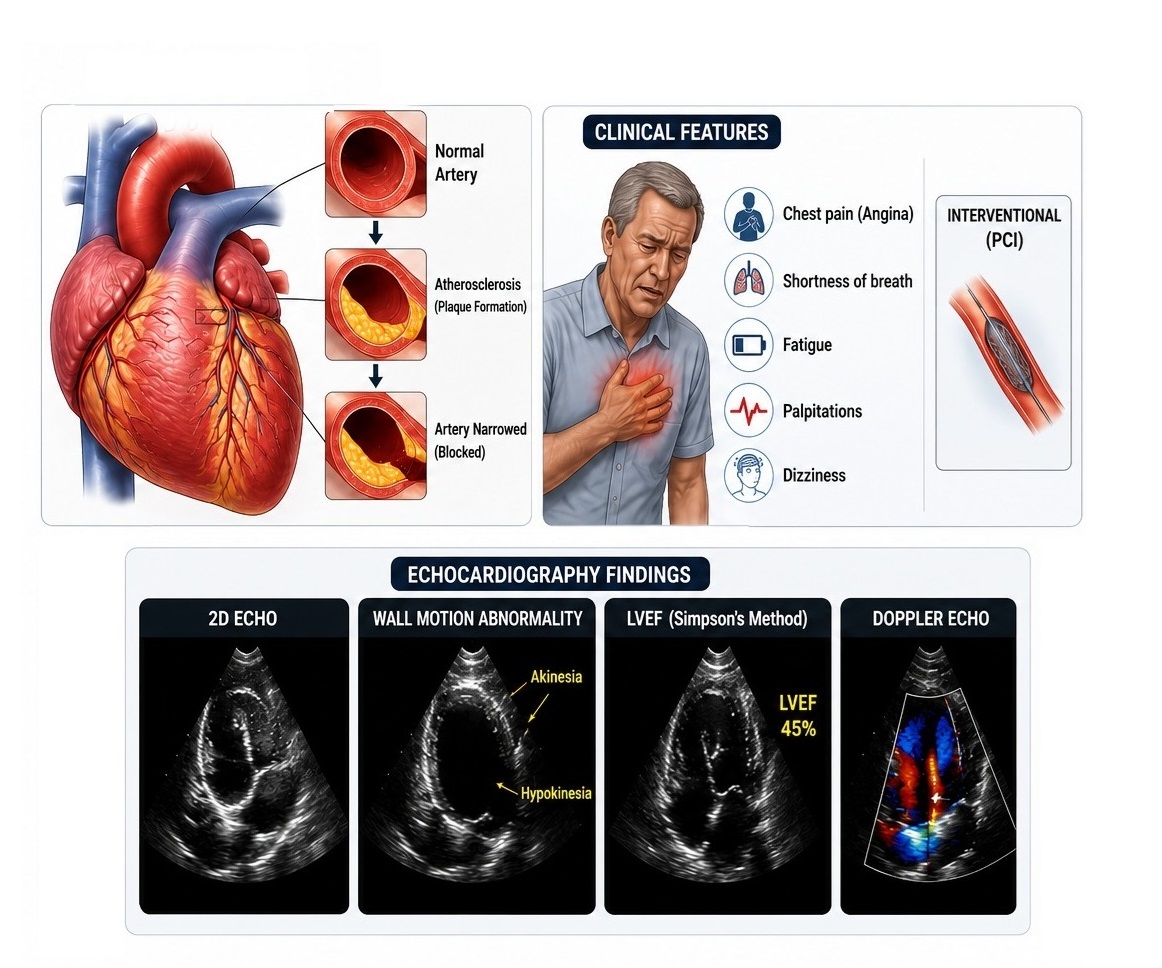
The cardiovascular system maintains tissue perfusion and oxygen delivery.
Cardiac Function
| Parameter |
Normal Value |
| Heart Rate |
60–100 bpm |
| Stroke Volume |
60–100 mL |
| Cardiac Output |
4–8 L/min |
| Cardiac Index |
2.5–4.0 L/min/m² |
| Ejection Fraction |
55–70% |
| End-Diastolic Volume |
120–130 mL |
| End-Systolic Volume |
50–60 mL |
Blood Pressure
| Parameter |
Normal Value |
| Systolic BP |
90–120 mmHg |
| Diastolic BP |
60–80 mmHg |
| Mean Arterial Pressure |
70–100 mmHg |
| Pulse Pressure |
30–50 mmHg |
Hemodynamic Parameters
| Parameter |
Normal Value |
| Central Venous Pressure |
2–8 mmHg |
| Pulmonary Artery Pressure |
15–30/4–12 mmHg |
| Pulmonary Capillary Wedge Pressure |
6–12 mmHg |
| Systemic Vascular Resistance |
800–1200 dyn·s/cm⁵ |
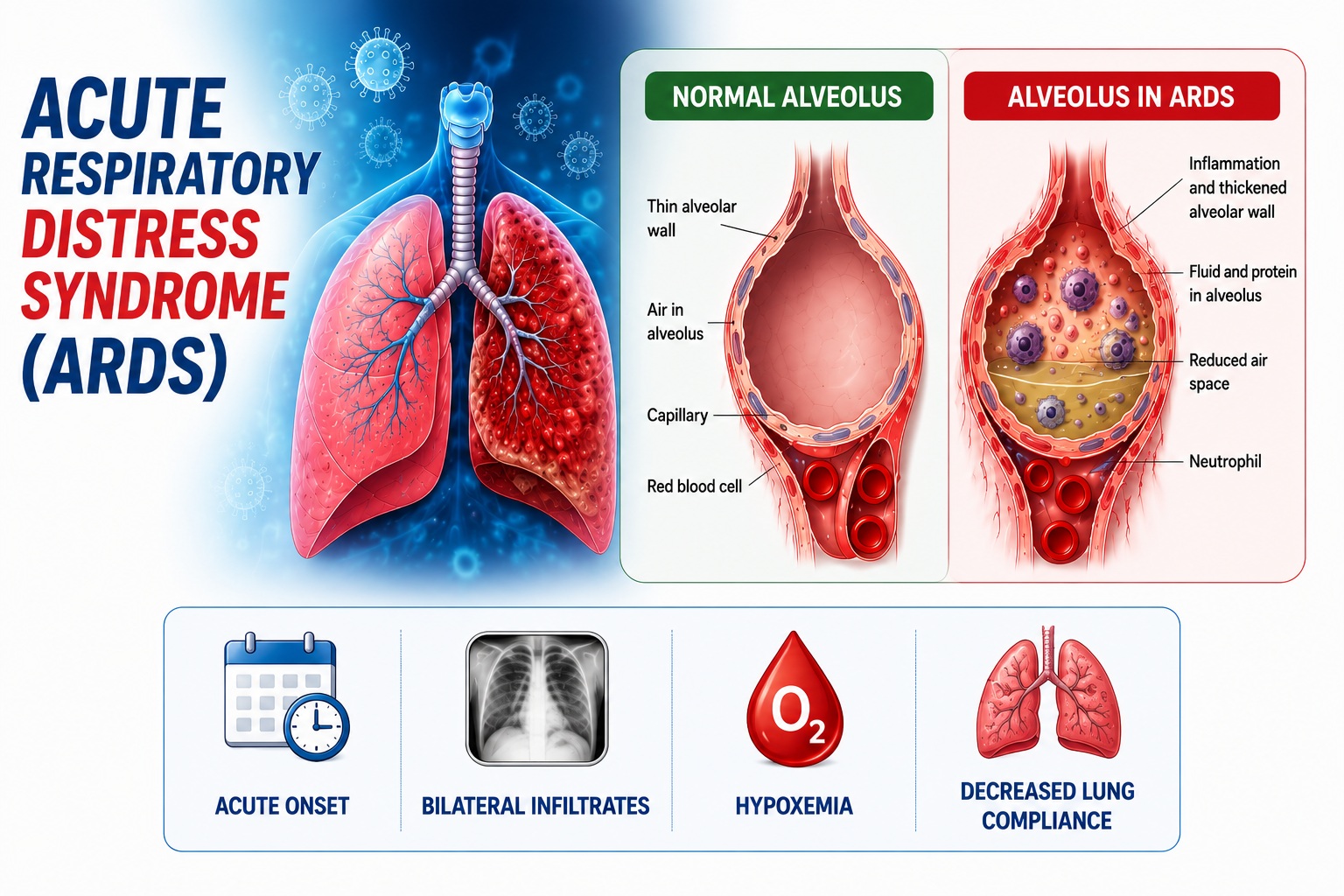
Respiratory Physiology
Pulmonary Volumes and Capacities
| Parameter |
Normal Value |
| Tidal Volume (TV) |
500 mL |
| Inspiratory Reserve Volume (IRV) |
3000 mL |
| Expiratory Reserve Volume (ERV) |
1100 mL |
| Residual Volume (RV) |
1200 mL |
| Vital Capacity (VC) |
4500–5000 mL |
| Total Lung Capacity (TLC) |
5800–6000 mL |
| Functional Residual Capacity (FRC) |
2300 mL |
| Inspiratory Capacity (IC) |
3500 mL |
Respiratory Parameters
| Parameter |
Normal Value |
| Respiratory Rate |
12–20/min |
| Minute Ventilation |
5–8 L/min |
| Alveolar Ventilation |
4–5 L/min |
| Dead Space Volume |
150 mL |
Blood Gas Physiology
Arterial Blood Gas Parameters
| Parameter |
Normal Value |
| pH |
7.35–7.45 |
| PaO₂ |
80–100 mmHg |
| PaCO₂ |
35–45 mmHg |
| HCO₃⁻ |
22–26 mmol/L |
| Base Excess |
−2 to +2 mmol/L |
| SaO₂ |
95–100% |
Renal Physiology
Renal Hemodynamics
| Parameter |
Normal Value |
| Renal Blood Flow |
1100–1300 mL/min |
| Renal Plasma Flow |
600–700 mL/min |
| Glomerular Filtration Rate |
90–125 mL/min/1.73m² |
| Filtration Fraction |
16–20% |
Urinary Parameters
| Parameter |
Normal Value |
| Urine Output |
0.5–1.5 mL/kg/hr |
| Daily Urine Volume |
800–2000 mL |
| Urine Osmolality |
50–1200 mOsm/kg |
| Urine Specific Gravity |
1.005–1.030 |
Gastrointestinal Physiology
Digestive Secretions
| Parameter |
Normal Value |
| Saliva Production |
1–1.5 L/day |
| Gastric Juice |
1.5–2.5 L/day |
| Pancreatic Secretion |
1–1.5 L/day |
| Bile Secretion |
500–1000 mL/day |
| Intestinal Secretion |
1–2 L/day |
Gastric Physiology
| Parameter |
Normal Value |
| Gastric pH |
1.5–3.5 |
| Gastric Emptying Time |
2–4 Hours |
Endocrine Physiology
Pituitary Hormones
| Hormone |
Normal Range |
| Growth Hormone |
<5 ng/mL (Basal) |
| ACTH |
10–60 pg/mL |
| Prolactin (Male) |
2–18 ng/mL |
| Prolactin (Female) |
2–25 ng/mL |
Thyroid Function
| Parameter |
Normal Value |
| TSH |
0.4–4.5 μIU/mL |
| Free T4 |
0.8–1.8 ng/dL |
| Free T3 |
2.3–4.2 pg/mL |
Adrenal Hormones
| Parameter |
Normal Value |
| Cortisol (0800 h) |
5–25 μg/dL |
| Aldosterone |
4–31 ng/dL |
Nervous System Physiology
Nerve Conduction
| Parameter |
Normal Value |
| Motor Nerve Conduction Velocity |
50–70 m/s |
| Sensory Nerve Conduction Velocity |
40–70 m/s |
| Synaptic Delay |
0.5 ms |
Cerebral Physiology
| Parameter |
Normal Value |
| Cerebral Blood Flow |
50 mL/100 g/min |
| Intracranial Pressure |
5–15 mmHg |
| CSF Production |
450–600 mL/day |
| Brain Oxygen Consumption |
3.5 mL/100 g/min |
Muscular Physiology
Skeletal Muscle
| Parameter |
Normal Value |
| Muscle Mass (Male) |
40–50% Body Weight |
| Muscle Mass (Female) |
30–40% Body Weight |
| Resting Muscle Blood Flow |
3–5 mL/100 g/min |
Neuromuscular Transmission
| Parameter |
Normal Value |
| End Plate Potential |
50–70 mV |
| Muscle Action Potential Duration |
2–5 ms |
Reproductive Physiology
Male Reproductive Parameters
| Parameter |
Normal Value |
| Testosterone |
300–1000 ng/dL |
| Semen Volume |
≥1.4 mL |
| Sperm Count |
≥16 Million/mL |
Female Reproductive Parameters
| Parameter |
Normal Value |
| Estradiol (Follicular Phase) |
20–350 pg/mL |
| Progesterone (Luteal Phase) |
5–20 ng/mL |
| FSH |
3–10 IU/L |
| LH |
2–15 IU/L |
Exercise Physiology
| Parameter |
Normal Value |
| VO₂ Max (Male) |
35–55 mL/kg/min |
| VO₂ Max (Female) |
27–45 mL/kg/min |
| Anaerobic Threshold |
50–70% VO₂ Max |
| Basal Metabolic Rate |
20–25 kcal/kg/day |
Thermoregulatory Physiology
| Parameter |
Normal Value |
| Core Body Temperature |
36.5–37.5°C |
| Skin Temperature |
32–35°C |
| Daily Heat Production |
1500–2500 kcal/day |
References
- Guyton and Hall Textbook of Medical Physiology.
- Ganong's Review of Medical Physiology.
- Boron and Boulpaep Medical Physiology.
- Vander's Human Physiology.
- Berne and Levy Physiology.
- International Union of Physiological Sciences.
- American Physiological Society.
- Federation of European Physiological Societies.
- Best and Taylor's Physiological Basis of Medical Practice.
- Sherwood Human Physiology.